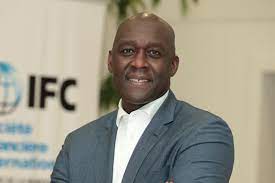

How Senegalese Economist, Makhtar Diop landed IFC’s top job
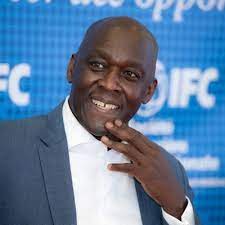
At the age of 60, Senegalese economist Makhtar Diop is taking over as head of the International Finance Corporation (IFC, World Bank Group). This achievement is the result of a lot of hard work and perseverance.
“Right choice, right time.” This simple tweet – written by Donald Kaberuka, a former president of the African Development Bank (AfDB) – particularly touched its recipient. It was just one of many other expressions of support that appeared on social media on 18 February.
Congratulations Makhtar Diop on your appointment as head of the @IFC_org. This is great news and another win for Africa! I wish you every success on your mission. @Diop_WB @IFC_fr @IFCAfrica @WorldBankAfrica @WorldBankhttps://t.co/OuwBYeZncS
— Cina Lawson (@cinalawson) February 18, 2021
On that day, Senegalese economist Makhtar Diop was officially introduced as the new managing director and vice-president of IFC – the World Bank’s private sector arm. He is the first African to head the IFC, which is the world’s largest international development institution.
A long process
After a long recruitment process (around 100 applications), the 60-year-old economist was chosen to replace Philippe Le Houérou as of 1 March 2021. The announcement of Le Houérou’s departure in June 2020 unleashed a ‘Who’s Who’ list of favourable candidates in Washington and in African capitals.
The list included Cameroonian economist Vera Songwe and Ivorian minister Thierry Tanoh, both former IFC staff, as well as Franco-Ivorian finance titan Tidjane Thiam.
Thiam would eventually sit on the ad hoc selection committee in charge of finding the ideal candidate, made up of six people from the Bretton Woods institution and chaired by Mari Pangestu.
It was a long process, impeded by the constraints of the ongoing health crisis, that concluded on 17 February when Diop’s candidacy was validated by the institution’s board.
On that date, the selection committee presented its short list to David Malpass, president of the World Bank Group. Malpass then had to choose amongst three candidates, all of whom were African.
Battle of the big boys
The names on that short list were Diop’s, former Togolese prime minister (2008-2012) Gilbert Houngbo – who was finally re-elected to head the International Fund for Agricultural Development (IFAD) in mid-February – and Leslie Maasdorp, deputy chairman and CFO of the New Development Bank (NDB).
Maasdorp also worked for Bank of America Merrill Lynch and Barclays, among others, and was deputy CEO of the Department of Public Enterprises in the South African Department of Labour during the privatisation wave of the late 1990s.
Malpass chose Diop and put his decision to a vote. The rest is history.
Stars coming into alignment
But why did the profile of the former Senegalese minister of the economy and finance (2000-2001), a herald of the World Bank, outshine the others? Part of the answer lies in the question and the rest is due to an alignment of the stars, making the son of a lawyer and a midwife from Saint-Louis the natural choice.
“With his academic background and professional achievements, Makhtar had more than enough experience for the position,” says Ibrahim Sagna, Afreximbank’s global head of advisory and capital markets.
Sagna praised his compatriot’s work ethic, with whom he had worked closely at the International Monetary Fund (IMF) in 1997 when Alassane Ouattara was the institution’s deputy managing director.
“Makhtar Diop is a leader who has always achieved results,” says Sagna, remembering that he had been an “already exceptional” person back then.
Although favoured, he gave up on the AfDB
In Washington, Diop – who is viewed as a moderate liberal as well as a strong supporter of good governance, and who became the first French-speaking African to be appointed vice-president of the World Bank in charge of Africa in 2012 – is highly respected.
These same assets helped make Diop a favourite for the AfDB presidency in 2014, at the end of Kaberuka’s second term. At the time, the Senegalese economist was strongly supported.
However, it was not to be. In mid-October 2014, against all odds, Diop withdrew his candidacy and Akinwumi Adesina was elected a few months later.
Refuting the controversies of the time, Diop’s entourage still asserts today that he withdrew due to “personal reasons” back in 2014. The economist has continued on his way without feeling the slightest bitterness, let alone any ideas of revenge.
This episode, however, allowed Diop to consolidate his CV and his experience within the World Bank Group to the point of heading its main subsidiary devoted to private investment in developing countries. “He started his career in the private sector, so it was in his DNA,” says a close friend.
The World Bank’s largest portfolio
After graduating in economics from the Universities of Warwick and Nottingham in England and in finance from the Ecole Supérieure des Sciences Commerciales Appliquées (ESLSCA) in France, Diop began his career in the banking sector. He joined the IMF in 1997 and joined the Senegalese government three years later as minister of economy and finance.
At the end of 2001, he joined the World Bank, a group that he never left, or almost never left. Diop’s six years as head of the World Bank’s Sub-Saharan Africa region were particularly noteworthy, as he oversaw a record-breaking $70bn in commitments.
In this position, he worked to mobilise private finance for infrastructure in Africa, fostered innovation ecosystems and accelerated the adoption of new technologies. He is an expert on renewable energy and has promoted investing in it as well as regional interconnectivity in the energy and transport sectors.
On the strength of this record, Jim Yong Kim, then president of the World Bank, appointed him as head of its new Infrastructure Department (previously part of the Sustainable Development portfolio) in 2018.
Diop added new strings to his bow as he became not only in charge of the transport, digital economy and energy sectors, but also of infrastructure financing and public-private partnerships.
Indispensable at the start of the pandemic
In the end, its scope (energy, transport, digital & telecoms) represents 31% of the World Bank’s net commitment portfolio. It is the largest portfolio at multilateral institution. Diop got closer to the eyes and ears of Yong Kim, and then of Malpass, who succeeded him in January 2019. Furthermore, he became indispensable once the pandemic broke out.
“The Covid-19 crisis has put the emphasis on digital, that’s for sure,” he said last December. He also recalls that the World Bank signed an action plan in response to the crisis in April 2020 with the World Economic Forum (WEF), the Global System for Mobile Communications (GSMA) and the International Telecommunication Union (ITU), which aims to ensure worldwide access to the equivalent of 4G by 2030.
Digital is one of the World Bank’s current focus areas, along with vaccine transport and logistics. Diop had been working on these issues for several months before being selected by the IFC.
Malpass did not fail to point this out on 18 February. “His skills will help the World Bank Group respond quickly to the global crisis and help ensure a green, resilient and inclusive recovery.” The circle is complete.
Understand Africa’s tomorrow… today
We believe that Africa is poorly represented, and badly under-estimated. Beyond the vast opportunity manifest in African markets, we highlight people who make a difference; leaders turning the tide, youth driving change, and an indefatigable business community. That is what we believe will change the continent, and that is what we report on. With hard-hitting investigations, innovative analysis and deep dives into countries and sectors, The Africa Report delivers the insight you need.
Makhtar Diop
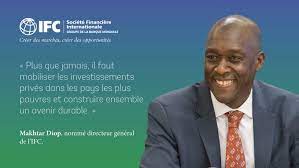
Makhtar Sop Diop (born in June 1960 in Dakar) is a Senegalese economist and politician who has been serving as the Managing Director of the International Finance Corporation (IFC) since 2021, making him the first African to hold the position.
Diop earlier served as Minister of Finance and Economy in the second government of Moustapha Niasse, under President Abdoulaye Wade. He joined the World Bank in 2001 and served as Vice President for Africa between 2012 and 2018 and as Vice President for Infrastructure from 2018 to 2021.[2] On March 1, 2021, Diop was named Managing Director and Executive Vice President of the International Finance Corporation, a sister organization of the World Bank.
Early life and education
Diop completed his postgraduate studies in economics at the University of Warwick and the University of Nottingham (UK), in Macroeconomics and Econometrics. He also earned a Master’s Degree in Finance in Paris, France.
Career
Early career
Diop began his career as a financial analyst and authorized agent for the Union of Senegalese Banks (USB), in Dakar.
Between 1986 and 1993, Diop was technical advisor to the Senegalese Ministry of Economy and Finance.
From 1997 to 2000, he worked for the International Monetary Fund as an economist.
Minister of Economy and Finance, 2000–2001
On April 2000, Diop was appointed Minister of Economy and Finance in the second government of Prime Minister Moustapha Niasse, and remained in this position until May 2001. During the period, Diop chaired the Council of Ministers of the West African Economic and Monetary Union.
During his time in office, Diop initiated a restructuring of the Customs[5] and modernization of the Treasury. He launched Senegal’s first “Sovereign Debt Credit Rating” with Standard and Poor’s[6] and played a role in the merger and the Omega Plan MRAP which led to NEPAD.
Career at the World Bank
Since October 2001, Diop has been working for the World Bank.[7] He was Country Director for Kenya, Somalia and Eritrea; Sector Director for Finance, Private Sector and Infrastructure for Latin America and the Caribbean; Director of Operations and Strategy for Latin America and the Caribbean; and Country Director for Brazil (2009 – 2012).
The World Bank’s Country Partnership Strategy (2012-2015) for Brazil was developed under Diop’s leadership.
On May 1, 2012 Diop was appointed by World Bank President Robert Zoellick as the institution’s Vice President for Africa, responsible for Sub-Saharan countries. For six years, he oversaw the delivery of $70 billion to Sub-Saharan Africa to help tackle development challenges. On July 1, 2018, he was appointed Vice President for Infrastructure. He is in charge of the World Bank portfolio for Energy & Extractives, Transport, Digital Development, Infrastructure Finance, Public-Private Partnerships (PPPs), and Guarantees. On March 1, 2021, Diop was named Managing Director and Executive Vice President of the International Finance Corporation, a sister organization of the World Bank.
Recognition
Diop has been named one of the 100 most influential Africans in the world by various magazines. In 2015, he received the Regents’ Lectureship Award from the University of California, Berkeley.
________________________________________________________________________
Senegal’s Makhtar Diop to head International Finance Corporation
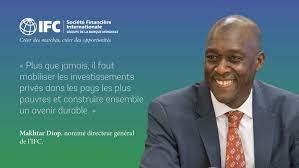
The new head of the International Finance Corporation (IFC), a sister organisation of the World Bank dedicated to the private sector, will be an African.
Makhtar Diop, the World Bank’s most recent vice president for infrastructure, has been chosen to succeed Frenchman Philippe Le Houérou as head of the International Finance Corporation.
According to several sources, the selection committee – chaired by Mari Pangestu and responsible for evaluating candidates to take over the reins of the IFC – has delivered its verdict.
In a meeting at the World Bank’s Washington headquarters on 17 February, the committee submitted a short-list of three people to David Malpass, president of the World Bank. One of the names on the list was Makhtar Diop, the former Senegalese finance minister.
Malpass then submitted Diop’s name to the board of directors for consideration, in accordance with the statutes of the Bretton Woods institution. We contacted Diop, who did not confirm this information at the time this article was written.
Approached by the AfDB in 2015
The appointment – which was made public on 18 February – represents a great achievement for the Senegalese leader, who has been forced to “pump the brakes” for half a decade.
Diop, former President Abdoulaye Wade’s finance minister and the first Francophone vice president of the World Bank (2012-2018), had been expected to run as president of the African Development Bank (AfDB) in the 2015 election.
President Macky Sall’s teams had, however, alerted the World Bank – which had temporarily removed Diop from his duties at Bretton Woods – out of fear that him travelling to the continent prior to the election would be perceived as an attempt by the World Bank to intervene in an African election.
He resigned a few days later and was reappointed to the World Bank, while Akinwumi Adesina, Nigeria’s minister of agriculture and rural development, was nominated head of the AfDB.
Development challenges
Since July 2018, Diop had been the World Bank’s vice president for infrastructure. He was also in charge of the energy and extractive industries, transport and digital development, infrastructure financing and public-private partnerships (PPPs).
Within this framework, he oversaw the World Bank’s attempts to fill the infrastructure gap in emerging and developing economies, while developing sustainable solutions.
During his previous tenure as head of the African region, he oversaw a record-breaking $70bn in commitments to address the continent’s major development challenges. These included expanding access to affordable and sustainable energy, promoting the economic empowerment of women and youth and fostering the conditions necessary for innovation and new technologies to flourish.
An economist by training, Diop began his career in the banking sector before joining the IMF and then the World Bank.
A crazy week for Africans
Since his departure – as of 1 October – which was announced on social media in June 2020, the potential successors to Philippe Le Houérou have been numerous.
In fact, the names of several African leaders were put forward as possible successors. Like that of Cameroonian Vera Songwe, who, since her departure from the IFC, has been serving as the secretary-general of the UN Economic Commission for Africa.
Another profile mentioned was that of Ivorian Thierry Tanoh. He previously served as vice president of Sub-Saharan Africa, Latin America and the Caribbean and Western Europe at IFC as well as the group chief executive of Ecobank, before joining President Ouattara’s government. However, Tanoh has not confirmed the rumours that he was being considered for this position.
In any case, both Nigerian economist Ngozi Onkojo-Iweala’s appointment as the new director-general of the World Trade Organisation on 15 February and Diop’s to the head of the influential financing institution have been a huge victory for the African continent.
Félicitations à ma sœur Dr. Ngozi Okonjo-Iweala (@NOIweala), nommée directrice générale de l’Organisation mondiale du commerce. Elle devient ainsi la 1ère femme et 1ère Africaine à prendre la tête de l’OMC. Une excellente nouvelle pour le monde du commerce international. pic.twitter.com/nEzXCUIJ6p
— Makhtar Diop (@Diop_WB) February 15, 2021
Translation: Congratulations to my sister Dr. Ngozi Okonjo-Iweala (@NOIweala), appointed Director-General of the World Trade Organisation. She is the first woman and African to take the helm of the WTO. This is excellent news for the world of international trade.