
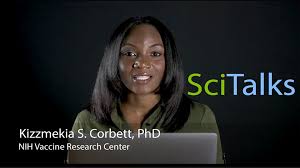
Kizzmekia Corbett, an African American woman, is praised as key scientist behind COVID-19 vaccine
Dr. Anthony Fauci said Kizzmekia Corbett’s involvement is a sign of hope.
COVID-19 vaccine researchers on what it’s like to develop these vaccines
Dr. Anthony Fauci, the nation’s top infectious disease expert and a constant presence on TV during the coronavirus pandemic, was asked a blunt question during a forum hosted last week by the National Urban League: “Can you talk about the input of African American scientists in the vaccine process?”
Fauci did not hesitate when giving his answer.
“The very vaccine that’s one of the two that has absolutely exquisite levels — 94 to 95% efficacy against clinical disease and almost 100% efficacy against serious disease that are shown to be clearly safe — that vaccine was actually developed in my institute’s vaccine research center by a team of scientists led by Dr. Barney Graham and his close colleague, Dr. Kizzmekia Corbett, or Kizzy Corbett,” Fauci told the forum. “Kizzy is an African American scientist who is right at the forefront of the development of the vaccine.”
Corbett is an expert on the front lines of the global race for a SARS-CoV-2 vaccine, and someone who will go down in history as one of the key players in developing the science that could end the pandemic.
She is one of the National Institutes of Health’s leading scientists behind the government’s search for a vaccine. Corbett is part of a team at NIH that worked with Moderna, the pharmaceutical company that developed one of the two mRNA vaccines that has shown to be more than 90% effective.
Moderna’s vaccine is expected to receive emergency use authorization from the U.S. Food and Drug Administration this month.
The other mRNA vaccine, developed by Pfizer, won emergency use authorization from the FDA on Friday.
As of now, the coronavirus has killed nearly 300,000 people and infected more than 15 million people in the U.S.
Even before Corbett took on one of the most challenging tasks of her professional career, she was a force to be reckoned with. As a student,she was selected to participate in Project SEED, a program for gifted minority students that allowed her to study chemistry in labs at the University of North Carolina at Chapel Hill and eventually landed a full ride to the University of Maryland Baltimore County, according to The Washington Post.
After graduating, Corbett enrolled in a doctorate program at UNC-Chapel Hill, where she worked as a research assistant studying virus infections and eventually received a PhD in microbiology and immunology, according to her LinkedIn page.
Her work with such pathogens began when she joined the NIH’s Vaccine Research Center as a postdoctoral fellow in 2014.
She told ABC News that she could have never anticipated what she has since been able to accomplish on Fauci’s team.
“The reason that I started to work in coronavirus was not to ever develop a vaccine, but really to have such a strong understanding in vaccine immune responses that we could potentially develop one,” she said.
This year, Corbett said, she has had to put her last six years of training to work.
In early January, “with the knowledge that there was a respiratory outbreak in the Wuhan district of China, [Dr. Barney Graham] started sending emails essentially telling me and the team to buckle up,” Corbett said.
Early in the pandemic, when Fauci predicted the world might see an effective vaccine in about a year, Corbett said she knew it was possible.
“It was certainly doable if all the things and all the pieces of the puzzle came together,” she said.
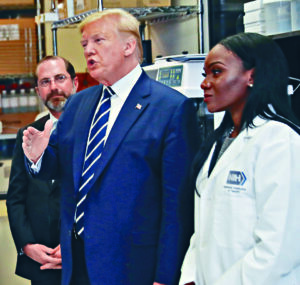
Corbett first made headlines on March 3 as part of a team of scientists who spoke with President Donald Trump at the NIH. At the time, the global impact of the COVID-19 crisis had yet to be felt in America.
WHO IS Kizzmekia Corbett
Kizzmekia “Kizzy” Shanta Corbett is an American viral immunologist at the Vaccine Research Center (VRC) at the National Institute of Allergy and Infectious Diseases, National Institutes of Health (NIAID NIH) based in Bethesda, Maryland. Appointed to the VRC in 2014, she is currently the scientific lead of the VRC’s Coronavirus Team, with research efforts aimed at propelling novel coronavirus vaccines, including a COVID-19 vaccine. In December 2020 the Institute’s Director Anthony Fauci, said: “Kizzy is an African American scientist who is right at the forefront of the development of the vaccine.”
Corbett was born in Hurdle Mills, North Carolina to Rhonda Brooks. She grew up in Hillsborough, a rural town in North Carolina, where she had a large family of step-siblings and foster siblings.
Corbett went to Oak Lane Elementary School and A.L. Stanback Middle School. Her fourth grade teacher, Myrtis Bradsher, recalls recognizing Corbett’s talent at an early age and encouraging Kizzy’s mother to place her in advanced classes. “I always thought she is going to do something one day. She dotted i’s and crossed t’s. The best in my 30 years of teaching,” Bradsher said in a 2020 interview with The Washington Post.
In 2004, Corbett graduated from Orange High School in Hillsborough, North Carolina. In 2008, Corbett received a B.S. in biological sciences and sociology from the University of Maryland, Baltimore County (UMBC), as a student in the Meyerhoff Scholarship Program. In 2014, Corbett received a PhD in microbiology and immunology from the University of North Carolina at Chapel Hill.
Career
While in high school, Corbett realized that she wanted to pursue a scientific career, and as part of a program called ProjectSEED, spent her summer holiday working in research laboratories, one of which was at UNC’s Kenan Labs with organic chemist James Morkin. In 2005, she was a summer intern at SUNY StonyBrook in Gloria Viboud’s lab where she studied Yersinia pseudotuberculosis pathogenesis. From 2006 to 2007, she worked as a lab tech in Susan Dorsey’s lab at the University of Maryland School of Nursing.
After earning her bachelor’s degree, from 2006 to 2009, Corbett was a biological sciences trainer at the National Institutes of Health (NIH), where she worked alongside Dr. Barney Graham. At the NIH, Corbett worked on the pathogenesis of respiratory syncytial virus as well as on a project focused on innovative vaccine platform advancement.
From 2009 to 2014, Corbett studied human antibody responses to dengue virus in Sri Lankan children under the supervision of Aravinda de Silva at University of North Carolina at Chapel Hill. She studied how people produce antibodies in response to dengue fever, and how the genetics of dengue fever impact the severity of a disease. From April to May 2014, as part of her research for her dissertation, Corbett worked as a visiting scholar at Genetech Research Institute in Colombo, Sri Lanka.
In October 2014, Corbett became a research fellow, working as a viral immunologist, at the NIH. Her research aims to uncover mechanisms of viral pathogenesis and host immunity. She specifically focuses on development of novel vaccines for coronaviridae.[10] Her early research considered the development of Severe Acute Respiratory Syndrome (SARS) and Middle East Respiratory Syndrome (MERS) vaccine antigens. During this time, she identified a simple way to make spike proteins that are stabilized in a conformation that renders them more immunogenic and manufacturable, in collaboration with researchers at Scripps Research Institute and Dartmouth College.
At the onset of the COVID-19 pandemic, Corbett started working on a vaccine to protect people from coronavirus disease. Recognizing that the virus was similar to severe acute respiratory syndrome coronavirus, Corbett’s team utilized previous knowledge of optimal coronavirus S proteins to tackle the novel coronavirus. S proteins form a “crown” on the surface of coronaviruses and are crucial for engagement of host cell receptors and the initiation of membrane fusion in coronavirus disease. This makes them a particularly vulnerable target for coronavirus prophylactics and therapeutics. Based on her previous research, Corbett’s team, in collaboration with investigators at UT Austin, transplanted stabilizing mutations from SARS-CoV S protein into SARS-CoV-2 spike protein. She was part of the NIH team who helped solve the cryogenic electron microscopy (CryoEM) structure of the SARS-CoV-2 spike protein. Her prior research suggested that messenger RNA (mRNA) encoding S protein could be used to excite the immune response to produce protective antibodies against coronavirus disease 2019.
To manufacture and test the COVID-19 vaccine Corbett’s team partnered with Moderna, a biotechnology company, to rapidly enter animal studies. Subsequently, the vaccine entered Phase 1 clinical trial only 66 days after the virus sequence was released. The trial, to be completed in at least 45 people, is a dose escalation study in the form of two injections separated by 28 days. Corbett’s work afforded her the opportunity to be a part of the National Institutes of Health team that welcomed Donald Trump to the Dale and Betty Bumpers Vaccine Research Center in March 2020.
Corbett has called for the public to be cautious and respectful of one another during the coronavirus pandemic, explaining that regular hand washing and sneezing into one’s elbow can help to minimize the spread of the virus. She has also emphasized that we should not stigmatize people who may be from areas where the virus started. When asked about her involvement with the development of the COVID-19 vaccine, Corbett said, “To be living in this moment where I have the opportunity to work on something that has imminent global importance…it’s just a surreal moment for me”.
Academic service
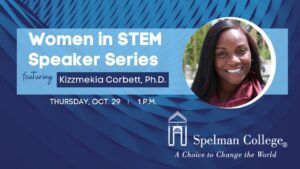
Corbett regularly shares information on Twitter and takes part in programs to inspire youth in underserved communities.
Honors
- 2002-2004: American Chemical Society, Project SEED at UNC‐Chapel Hill
- 2006: National Institute of Health, NIH Undergraduate Scholarship
- University of Maryland, Baltimore County, Meyerhoff Scholar
- 2013: Third Pan American Dengue Research Network Meeting Travel Award
Selected works and publications
 |
Scholia has an author profile for Kizzmekia Corbett. |
- Corbett, Kizzmekia Shanta (August 2014). Characterization of Human Antibody Responses to Dengue Virus Infections in a Sri Lankan Pediatric Cohort. Chapel Hill, NC: University of North Carolina at Chapel Hill Graduate School. doi:10.17615/ajjc-6r57. Wikidata (
 )
)
- Corbett, Kizzmekia S.; Katzelnick, Leah; Tissera, Hasitha; Amerasinghe, Ananda; de Silva, Aruna Dharshan; de Silva, Aravinda M. (15 February 2015). “Pre-existing Neutralizing Antibody Responses Distinguish Clinically Inapparent and Apparent Dengue Virus Infections in a Sri Lankan Pediatric Cohort”. The Journal of Infectious Diseases. 211 (4): 590–599. doi:10.1093/infdis/jiu481. PMID 25336728. Wikidata ()
- Kirchdoerfer, Robert N.; Cottrell, Christopher A.; Wang, Nianshuang; Pallesen, Jesper; Yassine, Hadi M.; Turner, Hannah L.; Corbett, Kizzmekia S.; Graham, Barney S.; McLellan, Jason S.; Ward, Andrew B. (2 March 2016). “Pre-fusion structure of a human coronavirus spike protein”. Nature. 531 (7592): 118–121. doi:10.1038/nature17200. ISSN 1476-4687. PMID 26935699. Wikidata ()
- Raut, Rajendra; Corbett, Kizzmekia S.; Tennekoon, Rashika N.; Premawansa, Sunil; Wijewickrama, Ananda; Premawansa, Gayani; Mieczkowski, Piotr; Rückert, Claudia; Ebel, Gregory D.; De Silva, Aruna D.; de Silva, Aravinda M. (2 January 2019). “Dengue type 1 viruses circulating in humans are highly infectious and poorly neutralized by human antibodies” (PDF). Proceedings of the National Academy of Sciences. 116 (1): 227–232. doi:10.1073/pnas.1812055115. PMID 30518559. Wikidata ()
- Corbett, Kizzmekia S.; Moin, Syed M.; Yassine, Hadi M.; Cagigi, Alberto; Kanekiyo, Masaru; Boyoglu-Barnum, Seyhan; Myers, Sky I.; Tsybovsky, Yaroslav; Wheatley, Adam K.; Schramm, Chaim A.; Gillespie, Rebecca A.; Shi, Wei; Wang, Lingshu; Zhang, Yi; Andrews, Sarah F.; Joyce, M. Gordon; Crank, Michelle C.; Douek, Daniel C.; McDermott, Adrian B.; Mascola, John R.; Graham, Barney S.; Boyington, Jeffrey C.; Subbarao, Kanta (26 February 2019). “Design of Nanoparticulate Group 2 Influenza Virus Hemagglutinin Stem Antigens That Activate Unmutated Ancestor B Cell Receptors of Broadly Neutralizing Antibody Lineages”. mBio. 10 (1). doi:10.1128/mBio.02810-18. PMID 30808695. Wikidata ()
- Rosen, Osnat; Chan, Leo Li-Ying; Abiona, Olubukola M.; Gough, Portia; Wang, Lingshu; Shi, Wei; Zhang, Yi; Wang, Nianshuang; Kong, Wing-Pui; McLellan, Jason S.; Graham, Barney S.; Corbett, Kizzmekia S. (March 2019). “A high-throughput inhibition assay to study MERS-CoV antibody interactions using image cytometry”. Journal of Virological Methods. 265: 77–83. doi:10.1016/j.jviromet.2018.11.009.
- Wang, Nianshuang; Rosen, Osnat; Wang, Lingshu; Turner, Hannah L.; Stevens, Laura J.; Corbett, Kizzmekia S.; Bowman, Charles A.; Pallesen, Jesper; Shi, Wei; Zhang, Yi; Leung, Kwanyee; Kirchdoerfer, Robert N.; Becker, Michelle M.; Denison, Mark R.; Chappell, James D.; Ward, Andrew B.; Graham, Barney S.; McLellan, Jason S. (24 September 2019). “Structural Definition of a Neutralization-Sensitive Epitope on the MERS-CoV S1-NTD”. Cell Reports. 28 (13): 3395–3405.e6. doi:10.1016/j.celrep.2019.08.052. PMID 31553909. Wikidata ()
- Wrapp, Daniel; Wang, Nianshuang; Corbett, Kizzmekia S.; Goldsmith, Jory A.; Hsieh, Ching-Lin; Abiona, Olubukola; Graham, Barney S.; McLellan, Jason S. (13 March 2020). “Cryo-EM Structure of the 2019-nCoV Spike in the Prefusion Conformation”. Science. 367 (6483): 1260–1263. doi:10.1126/science.abb2507. PMID 32075877. Wikidata ()
- Boyoglu-Barnum, Seyhan; Hutchinson, Geoffrey B.; Boyington, Jeffrey C.; Moin, Syed M.; Gillespie, Rebecca A.; Tsybovsky, Yaroslav; Stephens, Tyler; Vaile, John R.; Lederhofer, Julia; Corbett, Kizzmekia S.; Fisher, Brian E.; Yassine, Hadi M.; Andrews, Sarah F.; Crank, Michelle C.; McDermott, Adrian B.; Mascola, John R.; Graham, Barney S.; Kanekiyo, Masaru (7 February 2020). “Glycan repositioning of influenza hemagglutinin stem facilitates the elicitation of protective cross-group antibody responses”. Nature Communications.




