Julius Erving Talks 76ers, NBA Rivalries And BIG3 League

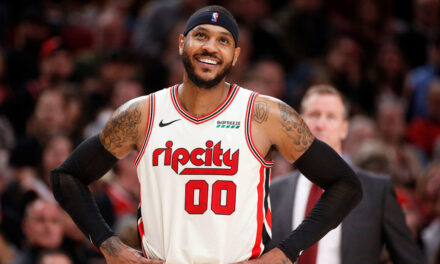
Julius Erving, head coach of BIG3’s team Tri-State, is high fived while entering the court in week nine of the three-on-three basketball league action, at KeyArena on August 20, 2017, in Seattle, Washington.
Each Friday evening this summer BIG3 league basketball takes the stage. The professional 3-on-3 basketball league founded by rapper and movie star Ice Cube consists of eight teams that feature former NBA stars on the court and some at the sideline, in the role of coach. BIG3 opened its second season this June in Houston in front of over 16,000 fans, and you can catch each installment on Fox Sports 1.
One of BIG3’s top teams, Tri-State, is coached by a basketball legend Julius Erving. Better known to some as “Dr. J,” Erving was a member of the 1983 NBA Champion Philadelphia 76ers. During his time in pro basketball, he scored an astounding 30,026 points (ranking him eighth overall), and was an 11-time NBA All-Star. Erving retired from the NBA in 1987 and was inducted into the Basketball Hall of Fame in 1993. He is also the only player to win the MVP accolade in both the NBA and the ABA, which merged with the NBA in 1976.
I caught up with Erving to talk with him about his 16-year career, BIG3 and the legends helping elevate basketball in 2018.
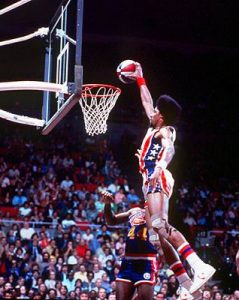
You were one of the first players credited with bringing a very exciting style of play to the game. Talk about your early career in the ABA.
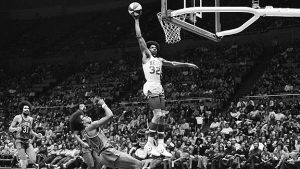
Once you became a 76er, your role changed. How did coming to the NBA change you as a player?
I made multiple adjustments to both my play and leadership style. I hate to say the seriousness of it made it less fun, but the NBA was less footloose and fancy-free. I did rework my approach to offense and did tone down my style of play.
The ’83 Sixers had players — Moses Malone, Bobby Jones, Mo Cheeks — with very different weapons. How did you make it work?
During your career, who did you most enjoy playing against? What rivalries were the best?
(Lakers guard-forward) Michael Cooper was always regarded as a great defensive player, so it was a challenge whenever we played Los Angeles. In our conference, we had Milwaukee with Marcus Johnson and Boston with John Havlicek and later that team evolved into Larry Bird’s team. Then, with the Washington Bullets, you had Wes Unseld, Bob Dandridge, and Elvin Hayes.
So far BIG3 is a hit, especially with die-hard hoops fans. What draws crowds?
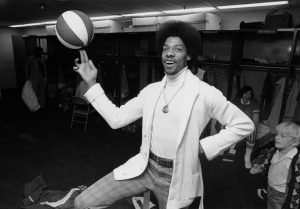
It starts in June, right on the heels of the NBA Finals, (so) there are fans who still want more and say, “now what do I do?” The two options are the WNBA and BIG3. The WNBA is great basketball. But the opportunity to see some of the biggest former stars of the NBA up close and personal or live on Fox Sports 1 on Friday nights — that’s a nice option. There’s a newness there, and you’ve got Hall of Famers coaching on the sidelines. And also, it’s a prelude to 3-on-3 basketball becoming an Olympic sport.
@JuliusErving
Well, this is more than a retirees’ league. Do you see BIG3 expanding basketball’s audience?
I think so. There’s a lot of interest in the game internationally, and all of the talent and action in BIG3 helps boost interest in the game.
BIG3 has its own unique take but doesn’t seem gimmicky. Does half-court hoops force players to bring their best game?
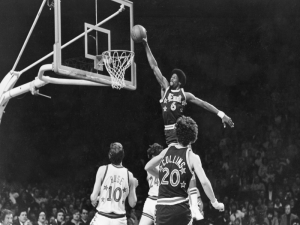
What is it like seeing your old NBA rivals like Cooper, George Gervin, and Rick Barry coaching BIG3’s teams?
The coaching fraternity here is a collection of guys who used to compete with and against each other, but with an elevated Hall of Fame status. I enjoy that but enjoy that we all travel with our families, and our spouses and children come to games and get to see it first hand.
Julius Winfield Ervin, THE GREATEST SMALL FORWARD OF ALL-TIME

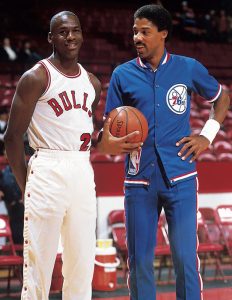
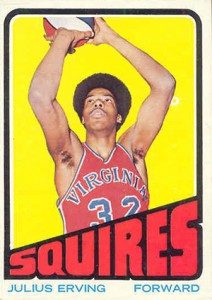
Erving won three championships, four Most Valuable Player Awards, and three scoring titles with the ABA’sVirginia Squires and New York Nets (now the NBA’s Brooklyn Nets) and the NBA’s Philadelphia 76ers. He is the eighth-highest scorer in ABA/NBA history with 30,026 points (NBA and ABA combined). He was well known forslam dunking from the free throw line in slam dunk contests and was the only player voted Most Valuable Player in both the ABA and the NBA.
Erving was inducted in 1993 into the Basketball Hall of Fame and was also named to the NBA’s 50th Anniversary All-Time team. In 1994, Erving was named by Sports Illustrated as one of the 40 most important athletes of all time. In 2004, he was inducted into the Nassau County Sports Hall of Fame.