The Album that turns 50 in 2021 that everyone should listen to, What’s Going On, By Marvin Gaye!!!!!!!!!!!!!!!
-
4
-
Facebook
-
Twitter
-
Google+
-
LinkedIn
-

Music and lyrics
“What’s Going On,” the title track, features soulful, passionate vocals and multi-tracked background singing, both by Gaye. The song had strong jazz, gospel, classical music orchestration, and arrangements. Reviewer Eric Henderson of Slant stated the song had an “understandably mournful tone” in response to the fallout of the late 1960s counterculture movements. Henderson also wrote that “Gaye’s choice to emphasize humanity at its most charitable rather than paint bleak pictures of destruction and disillusionment is characteristic of the album that follows.”
This is immediately followed in segue flow by the second track, “What’s Happening Brother”, a song Gaye dedicated to his brother Frankie, in which Gaye wrote to explain the disillusionment of war veterans who returned to civilian life and their disconnect from pop culture. “Flyin’ High (In the Friendly Sky)”, which took its title from a United Airlines tag, “fly the friendly skies”, dealt with dependence on heroin. The lyric, “I know, I’m hooked my friend, to the boy, who makes slaves out of men”, references heroin as “boy”, which was slang for the drug. “Save the Children” was an emotional plea to help disadvantaged children, warning, “who really cares/who’s willing to try/to save a world/that is destined to die?”, later crying out, “save the babies”. A truncated version of “God Is Love” follows “Save the Children” and makes references to God.
“Mercy Mercy Me (The Ecology)” was another emotional plea, this time for the environment. According to Motown legend, musician and Funk Brothers leader Earl Van Dyke once mentioned that Berry Gordy didn’t know of the word “ecology” and had to be told what it was though Gordy himself claimed otherwise. The song featured a memorable tenor saxophone riff from Detroit music legend Wild Bill Moore. “Right On” was a lengthy seven-minute jam influenced by funk rock and Latin soul rhythms that focused on Gaye’s own divided soul in which Gaye later pleaded in falsetto, “if you let me, I will take you to live where love is King” after complying that “true love can conquer hate every time”. “Wholy Holy” follows “God Is Love” as an emotional gospel plea advising people to “come together” to “proclaim love [as our] salvation”. The final track, “Inner City Blues (Make Me Wanna Holler)“, focuses on urban poverty, backed by a minimalist, dark blues-oriented funk vibe, with its bass riffs composed and performed by Bob Babbitt, who also performed on “Mercy Mercy Me” (Jamerson played on the rest of the album). The entire album’s stylistic use of a song cycle gave it a cohesive feel and was one of R&B’s first concept albums, described as “a groundbreaking experiment in collating a pseudo-classical suite of free-flowing songs.”
David Hepworth described the album as “like a jazz record not merely because it had jazz manners and was slathered in strings and employed congas and triangle as its most prominent form of percussion…But it’s also jazz in the sense that…[i]t plays like one long single.”
The Absolute Sound described the album as “a brilliant psychedelic soul song-cycle.
Marvin Gaye, THE GOAT OF MUSIC
|
Marvin Gaye
|
|
|---|---|
.jpg)
Gaye in 1973
|
|
| Born |
Marvin Pentz Gay Jr.
April 2, 1939 Washington, D.C., U.S.
|
| Died | April 1, 1984 (aged 44)
Los Angeles, California, U.S.
|
| Cause of death | Gunshot wound |
| Resting place | [Cremated – Ashes scattered (Pacific Ocean) |
| Occupation |
|
| Years active | 1957–1984 |
| Spouse(s) |
Janis Hunter
(m. 1977; div. 1981) |
| Musical career | |
| Genres | |
| Instruments |
|
| Labels | |
| Associated acts | |
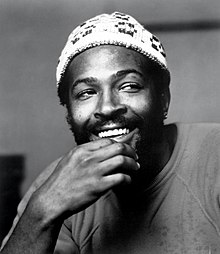
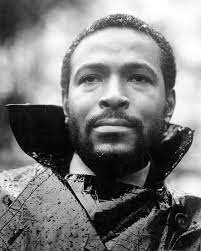
Marvin Gaye (born Marvin Pentz Gay Jr.; April 2, 1939 – April 1, 1984) was an American singer, songwriter, and record producer. He helped to shape the sound of Motown in the 1960s, first as an in-house session player and later as a solo artist with a string of hits, earning him the nicknames “Prince of Motown” and “Prince of Soul”.
Gaye’s Motown hits include “Ain’t That Peculiar“, “How Sweet It Is (To Be Loved By You)“, and “I Heard It Through the Grapevine“. Gaye also recorded duets with Mary Wells, Kim Weston, Tammi Terrell, and Diana Ross. During the 1970s, Gaye recorded the albums What’s Going On and Let’s Get It On and became one of the first artists in Motown to break away from the reins of a production company. His later recordings influenced several contemporary R&B subgenres, such as quiet storm and neo soul. He was a tax exile in Europe in the early 1980s; he released “Sexual Healing” the 1982 hit which won his first two Grammy Awards on the album Midnight Love. Gaye’s last televised appearances were at the 1983 NBA All-Star Game, where he sang “The Star-Spangled Banner“; Motown 25: Yesterday, Today, Forever; and Soul Train.
On April 1, 1984, the eve of his 45th birthday, Gaye was shot dead by his father, Marvin Gay Sr. at their house in West Adams, Los Angeles, after an argument. Gay Sr. later pleaded no contest to voluntary manslaughter, and received a six-year suspended sentence and five years of probation. Many institutions have posthumously bestowed Gaye with awards and other honors including the Grammy Lifetime Achievement Award, and inductions into the Rhythm and Blues Music Hall of Fame, the Songwriters Hall of Fame, and the Rock and Roll Hall of Fame.
-
-
Facebook
-
Twitter
-
Google+
-
LinkedIn

-
Facebook
-
Twitter
-
Google+
-
LinkedIn
-


“What’s Going On”
What’s Going On is a concept album with most of its songs segueing into the next and has been categorized as a song cycle. The narrative established by the songs is told from the point of view of a Vietnam veteran returning to his home country to witness hatred, suffering, and injustice. Gaye’s introspective lyrics explore themes of drug abuse, poverty, and the Vietnam War. He has also been credited with promoting awareness of ecological issues before the public outcry over them had become prominent.
The album was an immediate commercial and critical success, and came to be viewed by music historians as a classic of 1970s soul. In 2001, a deluxe edition of the album was released, featuring a recording of Gaye’s May 1972 concert at the Kennedy Center in Washington, D.C. Broad-ranging surveys of critics, musicians, and the general public have shown that What’s Going On is regarded as one of the greatest albums of all time and a landmark recording in popular music. In 2020, it was ranked number one on Rolling Stone‘s list of the 500 Greatest Albums of All Time.
Release and promotion
Released on May 21, 1971, What’s Going On became Gaye’s first album to reach the Billboard Top LPs top ten, peaking at number six, and staying on the chart for over a year, selling over two million copies, within twelve months after its release, becoming Motown’s and Gaye’s best-selling album to that date until he released Let’s Get It On in 1973. It also became Gaye’s second number-one album on Billboard‘s Soul LPs chart, where it stayed for nine weeks as well as staying inside the Billboard Soul LPs chart for a record breaking 58 weeks throughout 1971 and 1972. The title track, which had been released in January 1971 as the lead single to promote the album, sold over 200,000 copies within its first week and eventually two-and-a-half-million units by the end of the year.[16] It spent several weeks at number-two on the Billboard Hot 100 behind Three Dog Night‘s “Joy to the World“, and spent five weeks at number one on the Soul Singles chart between March 27 and April 24, 1971.
The follow-up single, “Mercy Mercy Me (The Ecology)“, peaked at number-four on the Hot 100, and also went number-one on the R&B chart. The third, and final, single, “Inner City Blues (Make Me Wanna Holler)“, peaked at number-nine on the Hot 100, while also rising to number-one on the R&B chart, thus making Gaye the first male solo artist to place three top ten singles on the Hot 100 off one album, as well as the first artist to place three singles at number-one on any Billboard chart (in this case, R&B), off one single album. The album had a modest commercial reception in countries such as Canada and the United Kingdom; “Save the Children” reached number 41 on the latter country’s singles chart, while the album reached number 56 twenty-five years after its original release. In 1984, the album re-entered the Billboard 200 following Gaye’s untimely death. In 1994, the album was certified gold by the Recording Industry Association of America in the United States for sales of half a million copies after it was issued on CD. On July 22, 2013. According to Soundscan, it has since sold in excess of 1.6 million copies since sales tracking began in 1991. Furthermore, the album was certified platinum by the British Phonographic Industry for shipments of 300,000 albums.
Six months after the release of What’s Going On, Sly and the Family Stone released There’s a Riot Goin’ On (1971), titled in response to Gaye’s album.
Critical reception
| Review scores | |
|---|---|
| Source | Rating |
| AllMusic | 
|
| Chicago Tribune |
|
| Christgau’s Record Guide | B+[26] |
| MusicHound R&B | 5/5[27] |
| The Observer |
|
| Rolling Stone |

|
| The Rolling Stone Album Guide |
|
| Slant Magazine |
|
| Sputnikmusic | 3/5[32] |
| The Village Voice | B[33] |
-
Facebook
-
Twitter
-
Google+
-
LinkedIn
What’s Going On was generally well received by contemporary critics. Writing for Rolling Stone in 1971, Vince Aletti praised Gaye’s thematic approach towards social and political concerns, while discussing the surprise of Motown releasing such an album. In a joint review of What’s Going On and Stevie Wonder‘s Where I’m Coming From, Aletti wrote, “Ambitious, personal albums may be a glut on the market elsewhere, but at Motown they’re something new … the album as a whole takes precedence, absorbing its own flaws. There are very few performers who could carry a project like this off. I’ve always admired Marvin Gaye, but I didn’t expect that he would be one of them. Guess I seriously underestimated him. It won’t happen again.” Billboard described the record as “a cross between Curtis Mayfield and that old Motown spell and outdoes anything Gaye’s ever done”. Time magazine hailed it as a “vast, melodically deft symphonic pop suite”.[36] Village Voice critic Robert Christgau was less impressed. Writing in Christgau’s Record Guide: Rock Albums of the Seventies (1981), he deemed it both a “groundbreaking personal statement” and a Berry Gordy product, baited by three highly original singles but marred elsewhere by indistinct music and indulgent use of David Van De Pitte’s strings, which Christgau called “the lowest kind of movie-background dreck”.
According to Paul Gambaccini, Gaye’s death in 1984 prompted a critical re-evaluation of the album, and most reviewers have since regarded it as an important masterpiece of popular music. In MusicHound R&B (1998), Gary Graff said What’s Going On was “not just a great Gaye album but is one of the great pop albums of all time”, and Rolling Stone later credited the album for having “revolutionized black music”. The Washington Post critic Geoffrey Himes names it an exemplary release of the progressive soul development from 1968 to 1973, and Pitchfork‘s Tom Breihan calls it a prog-soul masterpiece. BBC Music‘s David Katz described the album as “one of the greatest albums of all time, and nothing short of a masterpiece” and compared it to Miles Davis‘ Kind of Blue by saying “its non-standard musical arrangements, which heralded a new sound at the time, gives it a chilling edge that ultimately underscores its gravity, with subtle orchestral enhancements offset by percolating congas, expertly layered above James Jamerson’s bubbling bass”. In his 1994 review of Gaye’s re-issues, Chicago Tribune reviewer Greg Kot described the album as “soul music’s first ‘art’ album, an inner-city response to the Celtic mysticism of Van Morrison‘s Astral Weeks, the psychedelic pop of The Beatles‘ Sgt. Pepper’s Lonely Hearts Club Band [and] the rewired blues of Bob Dylan‘s Highway 61 Revisited.” Richie Unterberger found the album somewhat overrated, writing in The Rough Guide to Rock (2003) that much of its “meandering introspection” paled in comparison to its three singles.
A remastered deluxe edition with 28 additional tracks was released on May 31, 2011, to similar acclaim. At Metacritic, which assigns a normalized rating out of 100 to reviews from mainstream critics, the album received an average score of 100, based on ten reviews.
Accolades
In 1985, writers on British music weekly the NME voted it best album of all time. In 2004, the album’s title track was ranked number four on Rolling Stone‘s list of the 500 Greatest Songs of All Time. A 1999 critics’ poll conducted by British newspaper The Guardian named it the “Greatest Album of the 20th Century”. In 1997, What’s Going On was named the 17th greatest album of all time in a poll conducted in the United Kingdom by HMV Group, Channel 4, The Guardian and Classic FM. In 1997, The Guardian ranked the album number one on its list of the 100 Best Albums Ever. In 1998 Q magazine readers placed it at number 97, while in 2001 the TV network VH1 placed it at number 4. In 2003, it was one of 50 recordings chosen that year by the Library of Congress to be added to the National Recording Registry. What’s Going On was ranked number 6 on Rolling Stone magazine’s 2003 list of the 500 Greatest Albums of All Time, one of three Gaye albums to be included, succeeded by 1973’s Let’s Get It On (number 165) and 1978’s Here, My Dear (number 462). The album is Gaye’s highest-ranking entry on the list, as well as several other publications’ lists. In a revised 2020 list, this time voted on by musicians instead of music critics, the album moved up to the top spot, replacing The Beatles’ Sgt. Pepper’s Lonely Hearts Club Band.
| Publication | Country | Accolade | Year | Rank | ||
|---|---|---|---|---|---|---|
| Bill Shapiro | United States | The Top 100 Rock Compact Discs | 1991 | * | ||
| Jimmy Guteman | The Best Rock ‘n’ Roll Records of All Time | 1992 | * | |||
| Chris Smith | 101 Albums That Changed Popular Music | 2009 | * | |||
| Elvis Costello (Vanity Fair, Issue No. 483) | 500 Albums You Need | 2005 | * | |||
| Chuck Eddy | The Accidental Evolution of Rock’n’Roll | 1997 | * | |||
| Consequence of Sound | Top 100 Albums Ever | 2010 | 19 | |||
| Vibe | 100 Essential Albums of the 20th Century | 1999 | * | |||
| Dave Marsh & Kevin Stein | The 40 Best of Album Chartmakers by Year | 1981 | 7 | |||
| USA Today | Top 40 Albums of All Time | 2003 | * | |||
| Gear | The 100 Greatest Albums of the Century | 1999 | 2 | |||
| Life | Dozen Discs That Shook the World | 2005 | * | |||
| Pitchfork | Top 100 Albums of the 1970s | 2004 | 49 | |||
| Rolling Stone | The Essential 200 Rock Records | 1997 | * | |||
| Rolling Stone | The 500 Greatest Albums of All Time | 2003 | 6 | |||
| Rolling Stone | The 500 Greatest Albums of All Time | 2020 | 1 | |||
| Spin | 15 Most Influential Albums Not By Beatles, Stones, Dylan or Elvis | 2003 | * | |||
| The Recording Academy | Grammy Hall of Fame Albums and Songs | 1998 | * | |||
| Kitsap Sun | Top 200 Albums of the Last 40 Years | 2005 | 32 | |||
| Robert Dimery | 1001 Albums You Must Hear Before You Die | 2005 | * | |||
| Time | Top 100 Albums of All Time | 2006 | * | |||
| Paul Gambaccini | The World Critics Best Albums of All Time | 1987 | 4 | |||
| Gary Pig Gold | Canada | The 40 Most Influential Records of the 20th Century | 1999 | * | ||
| The Guardian | United Kingdom | 1000 Albums to Hear Before You Die | 2007 | * | ||
| The Guardian | The 100 Best Albums Ever | 1997 | 1 | |||
| Melody Maker | All Time Top 100 Albums | 2000 | 24 | |||
| Mojo | The 100 Greatest Albums Ever Made | 1995 | 6 | |||
| Mojo | The 100 Records That Changed the World | 2007 | 63 | |||
| NME | All Times Top 100 Albums | 1985 | 1 | |||
| NME | All Times Top 100 Albums + Top 50 by Decade | 1993 | 4 | |||
| NME | Top 100 Albums of All Time | 2003 | 27 | |||
| Q | The 50 Best Albums of the 70s | 1998 | 20 | |||
| Q | The Ultimate Music Collection | 2005 | * | |||
| Sounds | The 100 Best Albums of All Time | 1986 | 15 | |||
| The New Nation | Top 100 Albums by Black Artists | 2005 | 1 | |||
| Paul Gambaccini | The World Critics Best Albums of All Time | 1977 | 106 | |||
| Paul Gambaccini | The World Critics Best Albums of All Time | 1987 | 4 | |||
| The Observer | 50 Albums That Changed Music 1956–2006 | 2006 | 6 | |||
| The Times | The 100 Best Albums of All Time | 1993 | 49 | |||
| Times Online | The 20 Most Influential Albums | 2008 | 17 | |||
| Vox | 100 Records that Shook the World | 1991 | * | |||
| Hot Press | Ireland | The 100 Best Albums of All Time | 1989 | 23 | ||
| Hot Press | The 100 Best Albums Ever | 2003 | 41 | |||
| Adresseavisen | Norway | The 100 (+23) Best Albums of All Time | 1995 | 4 | ||
| Aftenposten | Top 50 Albums of All Time | 1999 | 3 | |||
| Dagbladet | The Best Albums of the Century | 1999 | * | |||
| Eggen & Kartvedt | The Guide to the 100 Important Rock Albums | 1999 | * | |||
| Panorama | The 30 Best Albums of the Year 1970–98 | 1999 | 2 | |||
| Platekompaniet | Top 100 Albums of All Time | 2001 | 12 | |||
| Tor Milde | The 100 Best Pop and Rock Albums of All Time | 2004 | 2 | |||
| Expressen | Sweden | The 100 Best Records Ever | 1999 | 8 | ||
| Slitz | The 50 Best Albums of All Time | 1990 | 13 | |||
| Pop | The World’s 100 Best Albums + 300 Complements | 1994 | 14 | |||
| Soundi | Finland | The 50 Best Albums of All Time + Top 10 by Decade | 1995 | 4 | ||
| OOR | Netherlands | The Best Albums of the 70s | 1979 | 19 | ||
| OOR | The 100 Best Albums of All Time | 2007 | 5 | |||
| VPRO | 299 Nominations of the Best Album of All Time | 2006 | * | |||
| Musik Express/Sounds | Germany | The 100 Masterpieces | 1993 | 22 | ||
| Spex | The 100 Albums of the Century | 1999 | 6 | |||
| Sounds | The 50 Best Albums of the 1970s | 2009 | 1 | |||
| Volume | France | 200 Records that Changed the World | 2008 | * | ||
| RockDelux | Spain | The 100 Best Albums of the 1970s | 1988 | 1 | ||
| RockDelux | The 200 Best Albums of All Time | 2002 | 2 | |||
| Alternative Melbourne | Australia | The Top 100 Rock/Pop Albums | 1996 | 67 | ||
| The Courier-Mail | 50 Defining Rock Albums | 2005 | 5 | |||
Awards and honors
The Rock and Roll Hall of Fame inducted him in 1987, declaring that Gaye “made a huge contribution to soul music in general and the Motown Sound in particular”. The page stated that Gaye “possessed a classic R&B voice that was edged with grit yet tempered with sweetness”. The page further states that Gaye “projected an air of soulful authority driven by fervid conviction and heartbroken vulnerability”. A year after his death, then-mayor of D.C., Marion Barry declared April 2 as “Marvin Gaye Jr. Memorial Scholarship Fund Day” in the city. Since then, a non-profit organization has helped to organize annual Marvin Gaye Day Celebrations in the city of Washington.
A year later, Gaye’s mother founded the Marvin P. Gaye Jr. Memorial Foundation in dedication to her son to help those suffering from drug abuse and alcoholism; however she died a day before the memorial was set to open in 1987. Gaye’s sister Jeanne once served as the foundation’s chairperson. In 1988, a year after his Rock and Roll Hall of Fame induction, Gaye was inducted posthumously to the NAACP Hall of Fame. In 1990, Gaye received a star on the Hollywood Walk of Fame. In 1996, Gaye posthumously received the Grammy Lifetime Achievement Award. The Rock and Roll Hall of Fame listed three Gaye recordings, “I Heard It Through the Grapevine”, “What’s Going On” and “Sexual Healing”, among its list of the 500 Songs That Shaped Rock and Roll. American music magazine Rolling Stone ranked Gaye No. 18 on their list of the “100 Greatest Artists of All Time”, sixth on their list of “100 Greatest Singers of All Time” and number 82 on their list of the “100 Greatest Songwriters of All Time”.[140] Q magazine ranked Gaye sixth on their list of the “100 Greatest Singers”.
Three of Gaye’s albums – What’s Going On (1971), Let’s Get It On (1973), and Here, My Dear (1978) – were ranked by Rolling Stone on their list of the 500 Greatest Albums of All Time. What’s Going On remains his largest-ranked album, reaching No. 6 on the Rolling Stone list and topped the NME list of the Top 100 Albums of All Time in 1985 and was later chosen in 2003 for inclusion by the Library of Congress to its National Recording Registry. In a revised 2020 Rolling Stone list of the 500 greatest albums of all time, What’s Going On was listed as the greatest album of all time. In addition, four of his songs – “I Heard It Through the Grapevine”, “What’s Going On”, “Let’s Get It On” and “Sexual Healing” – made it on the Rolling Stone list of the 500 Greatest Songs of All Time.
In 2005, Marvin Gaye was voted into the Michigan Rock and Roll Legends Hall of Fame.

In 2006, Watts Branch Park, a park in Washington that Gaye frequented as a teenager, was renamed Marvin Gaye Park. Three years later, the 5200 block of Foote Street NE in Deanwood, Washington, D.C., was renamed Marvin Gaye Way. In August 2014, Gaye was inducted to the official Rhythm and Blues Music Hall of Fame in its second class. In October 2015, the Songwriters Hall of Fame announced Gaye as a nominee for induction to the Hall’s 2016 class after posthumous nominations were included. Gaye was named as a posthumous inductee to that hall on March 2, 2016.[150][151] Gaye was subsequently inducted to the Songwriters Hall on June 9, 2016. In July 2018, a bill by California politician Karen Bass to rename a post office in South Los Angeles after Gaye was signed into law by President Donald Trump