Willie Mays
| Willie Mays | |||
|---|---|---|---|
 Mays in 1961
|
|||
| Center fielder | |||
| Born: May 6, 1931 Westfield, Alabama |
|||
|
|||
| MLB debut | |||
| May 25, 1951, for the New York Giants | |||
| Last MLB appearance | |||
| September 9, 1973, for the New York Mets | |||
| MLB statistics | |||
| Batting average | .302 | ||
| Hits | 3,283 | ||
| Home runs | 660 | ||
| Runs batted in | 1,903 | ||
| Stolen bases | 338 | ||
| Teams | |||
| Negro leagues
Major League Baseball |
|||
| Career highlights and awards | |||
|
|||
| Member of the National | |||
 |
|||
| Induction | 1979 | ||
| Vote | 94.7% (first ballot) | ||

Willie Howard Mays Jr. (born May 6, 1931), nicknamed “The Say Hey Kid“,[a] is an American former professional baseball center fielder. He spent almost all of his 22-season Major League Baseball (MLB) career playing for the New York/San Francisco Giants (1951–1952, 1954–1972) before finishing his career with the New York Mets (1972–1973). Regarded as one of the greatest baseball players of all time, he was elected to the Baseball Hall of Fame in 1979.
Mays joined the Birmingham Black Barons in 1948, playing with them until he was signed by the Giants once he graduated high school in 1950. He won the Rookie of the Year Award, spent two years in the United States Army during the Korean War, and won the National League (NL) Most Valuable Player (MVP) Award after leading the NL in batting with a .345 batting average in 1954. His over-the-shoulder catch of a Vic Wertz fly ball in Game 1 of the 1954 World Series is one of the most famous baseball plays of all time. The Giants swept the Cleveland Indians, the lone World Series triumph of Mays’s career.
Mays led the NL with 51 home runs in 1955. In 1956, he stole 40 bases, leading the NL for the first of four straight years. He won his first of 12 Gold Glove Awards in 1957, a record for outfielders. The Giants moved to San Francisco after the 1957 season, and Mays contended for the batting title until the final day of 1958, hitting a career-high .347. He batted over .300 for the next two seasons, leading the league in hits in 1960. After leading the NL with 129 runs scored in 1961, Mays led the NL in home runs in 1962 as the Giants won the NL pennant and faced the New York Yankees in the World Series, which the Giants lost in seven games. By 1963, Mays was making over $100,000 a year. In 1964, he was named the captain of the Giants by manager Alvin Dark, leading the NL with 47 home runs that year. He hit 52 the next year, leading the NL and winning his second MVP award. 1966 was the last of 10 seasons in which he had over 100 runs batted in. In 1969, he hit the 600th home run of his career, and he got his 3,000th hit in 1970. Traded to the Mets in 1972, Mays spent the rest of that season and 1973 with them before retiring. He served as a coach for the Mets until 1979 and later rejoined the Giants as a Special Assistant to the President and General Manager.
Mays finished his career batting .302 with 660 home runs, the sixth-most of all time, and 1,903 RBI. He holds MLB records for most putouts (7,095) and most extra-inning home runs (22). Over his career, he was selected to 24 All-Star Games, tied for the second-most of all time. Mays was named to the Major League Baseball All-Century Team in 1999 and ranked second on The Sporting News‘s “List of the 100 Greatest Baseball Players”, behind only Babe Ruth. He was presented the Presidential Medal of Freedom in 2015. “If somebody came up and hit .450, stole 100 bases and performed a miracle in the field every day, I’d still look you in the eye and say Willie was better,” manager Leo Durocher said.

| The Say Hey Kid
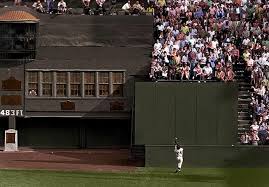
“He was probably the best all-around player when you take everything into consideration. It seemed like that Willie never made a mistake,” says Sandy Koufax about Willie Mays on ESPN’s SportsCentury show (Friday, December 10, 10 p.m. ET).Mays, a two-time MVP who hit 660 home runs and won 12 Gold Gloves, was voted No. 8 among North American athletes of the 20th century by SportsCentury’s distinguished 48-person panel. Signature game The game was tied 2-2 in the eighth inning when the Giants’ Don Liddle relieved to face Wertz with runners on first and second and nobody out. The Cleveland Indians slugger cracked a drive to deep centerfield in the Polo Grounds, far over Mays’ head. But Mays, traveling on the wings of the wind, raced after it. With his back to the infield, with his arms extended and his hands cupped, he caught the ball facing the right-centerfield bleachers, an estimated 450 feet from home plate. Then he swiftly pirouetted and, like a shot putter, threw the ball back in, losing his hat and his balance in the process. “I had it all the way,” the Say Hey Kid said later with a grin. In the bottom of the 10th, Mays walked and stole second. After an intentional walk, Dusty Rhodes pinch-hit a three-run homer that gave the Giants a 5-2 victory on their way to a surprising Series sweep. Odds and ends
|
||

Willie Mays Carries the Torch for His Generation
On the occasion of baseball’s oldest living Hall of Famer turning 90, a reflection on the conditioning that powered his greatness.
I once asked Willie Mays what his proudest achievement was in baseball.
His oft-cited designation as the greatest all-around player in history?
His two Most Valuable Player Awards?
None of the above.
“I came into the league with a 32-inch waist, and I retired with a 32-inch waist,” he told me 12 years ago when I interviewed him for a biography.
A bit surprising, but not really. Mays takes great pride in his durability as a player, and it wasn’t an accident. He never drank, never smoked, watched his diet and rarely went clubbing.
His self-discipline made possible an epic career that began with the Birmingham Black Barons in 1948, reached exalted heights with the New York Giants in the 1950s and didn’t end until 1973. Playing center field for 22 years in Major League Baseball, with a record 7,095 putouts and with 6,066 total bases, Mays surely ran more miles on the field, and with greater speed and more style, than any player before or since.
And he’s still going.

Mays turned 90 on Thursday. He is the oldest living member of the Hall of Fame, which recently has become particularly bittersweet. Since the beginning of 2020, we have seen the passing of 10 Hall of Famers, including Henry Aaron, Lou Brock, Bob Gibson, Al Kaline and Tom Seaver, all of whom were Mays’s contemporaries.

Image

Image
It’s as if a curtain were falling on an entire era of baseball, and an extraordinary era it was — from the 1950s through the ’70s, a period when M.L.B.’s expansion west turned the game into a transcontinental enterprise; when the burgeoning medium of television created instant megastars; and when the All-Star Game mattered. When the “Game of the Week” was must-watch TV and baseball was venerated as a model of inclusion and diversity.
Mays alone now holds the torch for that era.
He has lived in the Bay Area since the Giants moved to San Francisco in 1958, and he lives in a house he purchased in 1969. He typically travels to Scottsdale, Ariz., for the Giants’ spring training — he holds court in the clubhouse and gives young players nicknames — but Covid-19 restrictions kept him housebound this year.
A small circle of loyal friends looks after Mays, but aging is not much easier for a living legend than it is for someone else. Glaucoma has compromised his vision so that he has not driven in years, and even watching the games on TV can be difficult, though his ears still perk when he hears an announcer cry, “A Willie Mays catch!”
“He didn’t have to throw the ball,” Mays will grumble. (After his over-the-shoulder catch in the 1954 World Series, Mays’s throw from deep center in the Polo Grounds prevented the runner on second, who represented the go-ahead run, from tagging up and scoring.)
As with anyone who reaches their 90s, what is most difficult for Mays is that he keeps losing friends and loved ones — and he has always been anxious about death. He was raised by his Aunt Sarah in Fairfield, Ala., and when she died in 1954, Mays returned home for her funeral but was so distraught that he stayed in his bedroom for most of the visit. He avoids all funerals, if possible, but they are, of course, inevitable. His beloved wife, Mae, died in 2013, and rarely does a month go by in which someone he knows from the baseball world, including the Negro leagues, does not pass away.
He was particularly close to Seaver, who as a college player noticed that Mays didn’t button the top of his jersey, so Seaver never buttoned the top of his. They became teammates when Mays was traded to the Mets in 1972, and before each game Seaver started, Mays asked him how he was going to pitch each hitter. As the game progressed, Seaver discreetly signaled to Mays in center what adjustments he was making on the mound, and Mays repositioned himself accordingly.
Those subtleties are why Mays’s lifetime stats, as exceptional as they are — .302 batting average, .941 O.P.S., 660 home runs, 338 stolen bases, 12 Gold Gloves — do not capture his true greatness. He defied the box score.
The paradox of Mays’s career is that the part he is most proud of — his durability — is not only overlooked but completely subverted by the misfortunes of his final game. It’s time to correct the record.
Mays wasn’t just durable (2,992 regular-season games). He rarely took a day off.
His first full year was 1954, when the season was 154 games, and he played in more than 150 for eight straight seasons. In 1962, when the National League extended its season to 162 games, he played in every one (plus two All-Star Games), and he continued at close to that clip for the next four years. In 1966, he played all 10 innings of the All-Star Game in St. Louis’s muggy 105-degree heat. How hard did he push himself? Twice in his career, Mays collapsed on the field or in the dugout from exhaustion and was hospitalized. Not until he was 41 did he play fewer than 100 games.

Along the way, he won his second M.V.P. Award at 34 and was still one of the game’s best players at 40 — his .907 O.P.S. was 225 points above the league average. The following year, in 1972, he led the Mets in on-base percentage and was third on the team in batting average. It was the Say Hey Kid’s triumphant return to New York, and had he retired then, after years of slamming into catchers and crashing into walls, he would have been remembered for his rugged invincibility.
But Mays played one more year, 1973, and injured throughout the season, he appeared in only 66 games. The Mets reached the World Series, and though Mays had barely played in six weeks, in Game 2 in Oakland, he pinch-ran in the ninth inning and was then sent into center field. It was a brutal sunny day, with players staggering under pop-ups all game (six errors were committed). In both the ninth and 12th innings, Mays lost fly balls in the sun and looked terrible doing so. He was scorned for his pratfalls.
Never mind that many great athletes — Babe Ruth and Aaron in baseball, Johnny Unitas, Muhammad Ali and Michael Jordan in other sports — play too long. Mays became the cautionary tale for all athletes — and, for that matter, entertainers and politicians — who don’t know when to quit.
Mays is too proud to acknowledge that this hurts him, but I’m certain it does. He makes no claims about being the greatest player of all time and isn’t interested in the discussion. He dismisses comparisons to other players. He jokes that if he had known stats were important, he would have paid attention to them. He is too stubborn to be an egotist.
What was important to him was that he helped his team win, he entertained the fans and he honored the game — which, in his mind, he did by playing every game he could, as hard as he could, as long as he could.
Willie Mays at 90? Of course. It befits a man whose durability, on and off the field, is his legacy — and whose endurance is a poignant reminder of a certain era in American sports, glorious but vanishing.
James S. Hirsch is the author of “Willie Mays: The Life, the Legend.”
Willie Mays at 90 — He was O.J. SIMPSON, Michael Jordan, TIGER WOODS and PELE ALL IN ONE
To appreciate Willie Mays, the oldest living Hall of Famer at age 90, is to remember him at 20. When he joined the New York Giants in 1951, the game had never seen an athlete like him — breathtakingly graceful, the greatest combination of power, speed and defense ever to wear a major league uniform. And 70 years later, to many, he remains precisely that.
“You’d sit on the bench and watch Willie Mays,” Hall of Famer Reggie Jackson said. “It was so exciting just to watch him. People did that with Jim Brown. They did that with the acrobatics and greatness of [Michael] Jordan. It’s like players today going to watch the pregame warm-ups of Steph Curry. To watch Willie warm up, to throw the ball underhand, to make a basket catch. The beauty and the grace. For the kids today, it was like watching Simone Biles. It was like watching [Mikhail] Baryshnikov. It was poetry in motion. It was so beautiful, so pretty, to watch this athlete just run on the field, catch a ball. I loved to play against Willie Mays because it meant that I got to watch Willie Mays.”
Mays was one of the three great center fielders in New York, joining the Yankees’ sensational Mickey Mantle and Dodgers Hall of Famer Duke Snider. But as Mantle once said, “Well, there were the two of us … and then there was Willie.”
Ken Griffey Jr. made it even simpler.
“I call him ‘The Godfather of Center Fielders,'” Junior said.
And what of those comparisons, that Griffey would be the next Mays?
“In baseball, comparisons are always made, but I didn’t compare myself to him,” Griffey said. “But I also didn’t not want to be compared to him, if that makes sense. You always want to be compared to the best.”

Lon Simmons, a Hall of Fame broadcaster who called Giants games all 14 years that Mays played in San Francisco once the team moved west in 1958, said, “Willie was so good, the fans expected a miracle from him every day. So he gave them a miracle every other day.”
Mays is generally considered not only the greatest center fielder of all time, but after Babe Ruth, the greatest player of all time. I once asked Doug Rader, a five-time Gold Glove third baseman for the Astros from 1967 to 1977 and a later a big league manager, who was the best player he had ever seen. Rader laughed.
“Bill Mays, who else?” he said.
Hall of Famer Juan Marichal agreed.
“Willie was the best, No. 1 all time … and I know,” Marichal said. “I was there for a lot of Willie.”
Who else? Willie Mays was that good.
“He was magical,” Hall of Fame catcher Johnny Bench said. “He was perfect.”
“Best player I’ve ever seen,” said Tim McCarver, a former catcher who played in four decades and later became a Hall of Fame broadcaster. “He could do all the things that other guys couldn’t.”
“He was the first player to have genuine swag,” Astros manager Dusty Baker said.
There were five-tool players before Mays, but all of Mays’ tools were among the best in the game, like a lead singer who wrote the songs and could also play all the instruments better than anyone in the band. Mays’ 12 Gold Gloves are the most ever by a player in the 500-home run club. When he retired in 1973, he was third all time in homers after averaging 33 a year.
Indeed, he could play the piano and move it, too.
“He has all the same traits as Mike Trout,” Pete Rose said. “But [Trout] doesn’t have Willie’s flair.”
It almost wasn’t fair.
“Willie Mays was too good,” former teammate Felipe Alou said.
The Bat
Mays hit 660 home runs, now sixth most of all time. He had 3,283 hits, 11th most ever. He won two MVPs, 11 years apart. He had a .302 average, an OPS over .900 for 13 straight years, an OPS over 1.000 in five seasons. He won a National League batting title and four home run titles. He played 14 years in Candlestick Park, a big ballpark with swirling winds; in another home ballpark, he might have hit 700 homers. If he hadn’t missed nearly two prime seasons to military service, he might have hit closer to 800. His swing was short and compact. He often stepped in the bucket, but could still cover the outside part of the plate.

Former manager Bobby Valentine
“It was a different sound off his bat. One day I got to the ballpark very early just to check out his bats. I went to the other dugout to see if they were different. They were heavy; they weren’t different. He was different.”

Pete Rose
“I felt sorry for Willie in a way having to play at that s—hole Candlestick. That was the worst place in the world to play baseball. It was always windy and cold. The sun was always in your eyes. There were 10,000, 12,000 people at every game. If he played today in the bandboxes in Cincinnati and Philadelphia and some other places, he’d hit 70 homers a year. He wasn’t just a power hitter. He was a good hitter. He loved to talk hitting. If he had hit behind me and [Joe] Morgan, he’d have driven in 500 or 600 more runs.”

Former manager and catcher Joe Torre
“Willie was a left-center, right-center hitter. The ballparks he played didn’t aid him. He hit 660 home runs, but he had to earn every one of them at home. The Polo Grounds was short down the lines, but in the gap, they were very deep. And he played at Candlestick. After noon, the ball would fly to right field, but you could shoot a bazooka off in left field some of those nights and the ball wouldn’t go anywhere.”
One night in Milwaukee in 1961, Mays hit four home runs in one game.

Simmons
“The wind knocked another one down. Otherwise, he would have had five.”
Torre
“Willie didn’t like to wait in the box. He wants you to throw the ball right now. There were times where I’d put a sign down, but I wouldn’t put anything down. And Willie would talk to you. He’d say, ‘I know what you’re doing. I know what you’re doing.’ It was impossible not to love him even though he scared you to death because he was so good. One time, I tried to distract him by talking to him. I asked him a question at the plate, I don’t remember what it was about, maybe about a restaurant, and while answering the question, he hit the ball out of the ballpark. Then he sort of made a half turn to me as he started to first base and told me, ‘I’ll finish the story later.'”

Bench
“Willie would come to the plate and he was swinging his bat back and forth as only Willie could. And every time he swung this way, he’d go back this way [toward the catcher], he would be looking for the sign. There was no one doing the drums or banging trash cans back then. But Peanuts Lowrey [the Giants first-base coach] was telling him what pitch was coming. So I’m squatting back there, and Willie steps out of the box, looks at me and says, ‘Are you going to call a signal or what?’ And I said, ‘As soon as you stop looking back here.’ And he laughed and said, ‘Oh, you got me! Oh, you got me!'”
Most of that power came from Mays’ legendarily strong hands.

Baker
“I once went up to him behind the batting cage as a rookie. I asked him, ‘Why do you play me right behind second base? I’ll hit that ball over your head.’ Willie said, ‘Boy, because you choke up on the bat. You ain’t strong enough to hit that ball over my head. That’s why I play you right behind second base.’ Then he showed me his hands. The muscle between his thumb and his forefinger looked like a golf ball in there. He said, ‘Boy, let me see your hands.’ I had nothing. He said, ‘That’s why I play you behind second base.’ So I immediately went to squeezing hand grips to get that muscle in there.”
Valentine
“When you shook Willie’s hand, you were shaking a hand — a man’s hand. It’s him, Rico Carty and Hank [Aaron]. Willie’s hand would engulf your hand. It gulped it up.”

Duane Kuiper, former major league and Giants broadcaster
“The truth is that those guys who played in the ’60s all had huge, strong hands — Mays, Aaron, [Willie] McCovey, [Frank] Robinson, [Orlando] Cepeda. They were all like dairy farmers who milked cows by hand. With those guys, you had to get your hand in there first or they’d crush it. My dad always told me, ‘You have to win the handshake.’ But with Willie, you couldn’t.”
Bench (who has his own enormous hands)
“Willie’s hands are so thick. When we played golf, we both had the oversized grips. He’d come over, grab my clubs and say, ‘These feel good.'”
Rose
“Willie also had giant forearms. Look, I’m as big as Willie Mays [both around 5-11 and 170-190 pounds]. And he hit 660 homers and I had 160.”
The Glove
Mays won 12 Gold Gloves. Consider this, though: They didn’t begin being awarded until 1957; he could have won 16. He had tremendous speed, incredible range and got as good a jump on the ball as anyone ever.

Former Giants pitcher Steve Stone
“He was the best center fielder in the game when he was 39 years old. It’s truly amazing how long he was able to maintain his skills.”
Mays’ signature was the famous basket catch: Instead of catching the ball in front of his face as did and does every other outfielder, Mays would often nonchalantly catch it at his hip.
Bench
“And he never missed one. He was so effortless. Back then, you wanted to put mustard on him. But that was just his natural ability and the grace he had in performing. Almost every game it seems like he made an amazing play. You could have two had outfielders, put the other in the infield, because Willie covered it all.”

McCarver
“[Cardinals teammate] Curt Flood was the best I’ve ever seen against the wall. He was better than Willie against the wall. But Curt played deep. Willie didn’t play deep; he played shallow. Willie never went to the wall. Willie was the wall.”
Alou (who played left or right field next to Mays for six years)
“I found myself at times watching the game like a fan would watch a game. A ball would be hit and I would say, like a fan or a broadcaster, ‘Is he really going to catch this one?’ He had an amazing first step. He was covering half of the field by himself.”
Baker
“Chris Speier [who was a rookie with the Giants in 1971] told me stories that Willie was calling pitches from center field for the pitcher to throw a certain hitter. He and Hank Aaron, in those days, they didn’t have scouting reports. They could tell where a guy was going to hit the ball by his hand position: If his hands were outside the zone, he was going to pull the ball. If his hands were in tight, he was going to try to inside-out the ball to the opposite field. Those guys studied all the hitters back then. They didn’t need a scout.”

Hall of Famer Tony Perez
“The best play I ever saw him make was the ball that Vada Pinson hit to right-center field at Candlestick. Willie ran the ball down, collided with [right fielder Bobby] Bonds and caught the ball. I don’t know how Willie caught it.”
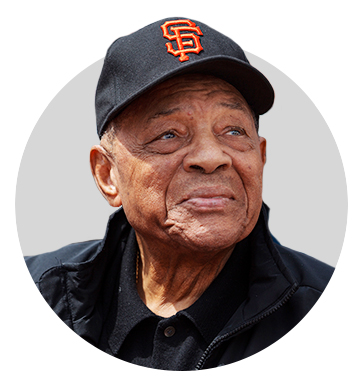
Mays
“Leon [Wagner] could hit, but you never knew where he might catch the ball. So one day, there’s a high fly ball. I go after it. I think Leon is going to catch it, but he’s just standing there like this [hands at his side]. So I jumped, I put my foot right in his belt buckle. I caught the ball and came down on him. I thought, ‘Oh no, I cut him.’ I went to him and said, ‘Leon, pull up your shirt. Let me see where I cut you.’ There were no marks. I don’t know how. I hit him with my spikes in his belt buckle. No one is going to believe that catch.”
Mays made perhaps the greatest defensive play — and the most famous — in World Series history when he robbed the Indians’ Vic Wertz with a running catch in deep center field in 1954.
Hall of Famer Bob Feller
“That really wasn’t that great of a catch. As soon as it was hit, everyone on our bench knew that he was going to catch it … because he is Willie Mays.”

Jackson
“I have the last glove that Willie Mays wore. It says 1954 World Champions on it. I bought it.” For how much? “Let’s just say, if I sold it, it would take between $200,000-$250,000. I bought it because no one used a glove better than Willie Mays.”
The Arm
Mays had a tremendously strong and accurate arm, which is critical for a center fielder. A throw to the plate has to have enough carry to get it over the mound.
Bench
“You already knew there were guys that you never, ever ran on. You had respect for those guys. Willie charged the ball as well as anyone who ever played baseball. He was able to judge the speed of the ball so well so he could scoop and throw.”
McCarver
“Johnny Keane [the Cardinals manager from 1961 to 1964] told us in meetings, ‘Don’t run on Willie, he will throw you out. He’s baiting you. He wants you to think he can’t, and then he does.’ Willie figured it out. Willie always figured everything out.”
Mays
“They [people in baseball] told me, ‘You can’t do round-robin.’ That’s throwing out a runner at first base, second base, third base and home in the same game. I said, ‘I can do that. What are you talking about?’ So, we’re at Dodger Stadium, [Don] Drysdale hits the ball over the middle for a base hit. I watched him, he put his head down and started walking to first. I thought, ‘I got him.’ So I threw him out at first. He cussed me something fierce. The next inning, Maury Wills went to third, he tried to score on a fly ball, and I threw Maury out at home. The next inning, Willie Davis tried to go from first to third. I threw him out at third. Jim Lefebvre hits a ball in the gap. I had him out by five feet at second base, [Giants second baseman] Tito [Fuentes] had him, but he didn’t squeeze the ball. Tito was crying at second base. He knew what I was trying to do. So I had to call time. I go in and told Tito, ‘Don’t worry, it’s not the end of the world.’ He said, ‘Yes, it is. I know round-robin was right there in your grasp.’ I told him, ‘Don’t worry, I’ll get it the next time.’ But, I never came close … but I would have had it that day.”

Hall of Famer and former Mays teammate Orlando Cepeda
“Ave Maria! I never saw anyone go from first to third on Willie’s arm. Felipe Alou was a great right fielder, but Willie once told Felipe on a fly ball hit by Willie Kirkland to right center, ‘Let me take it, let me take it.’ So Willie caught the ball at the 390-foot sign in right-center field, and he threw a low throw, on the line, in the air, all the way to third base. Willie had the greatest throwing arm I’ve ever seen, even better than [Roberto] Clemente’s arm.”

Marichal
“Before every game that me [or] Gaylord [Perry] pitched, we’d have a meeting about how we were going to pitch the other team that night. It was always a three-man meeting. Me, the catcher and Willie Mays. He used to help us on how to pitch all the hitters on the other team. Willie knew exactly what to do with each hitter.”
The Legs
It wasn’t just the stolen bases that separated Mays from other players, especially other power hitters. It was his innate feel for baserunning, going first to third, scoring from second on a single, legging out one of the 140 triples he hit, including a league-best 20 in 1957.
Perez
“He was one of the greatest. He would go from first base to third on a ball to right center. He didn’t even have to look at the third-base coach. He was his own coach.”
McCarver
“He was a terror on the bases.”
Alou
“I was always told that Jackie Robinson was the only baserunner better than Willie, but I used to wonder, ‘How can you be a better runner than Willie Mays?’ I saw him score standing up at least 10 times on a wild pitch that wasn’t 10 feet from home plate.”
Hall of Famer Willie McCovey (who usually hit behind Mays in the lineup)
“Willie would start to run to second on the wild pitch or a passed ball, then go back to first because he knew they’d walk me with first base open. Oh, Willie saw it all.”
Rose
“Willie had great instincts on the bases and he was always aggressive. I was an aggressive baserunner also. I developed my baserunning skills watching Willie Mays play.”
Bench
“Willie was hitting 50 homers so you can’t afford to have him running and getting hurt all the time. You can say 29th [all time in steals when he retired], but he could have easily moved into the top 10. And on a single, it would have been strange if he didn’t go first to third. He had one of the best turns rounding second or third you could possibly have. With his agility, he made the most perfect turns.”
Jackson
“After I retired, I took Willie to the eye doctor several times. He had early glaucoma. One day, we’re driving and I asked him about [Jose] Canseco going 40-40 [homers and stolen bases in one season]. I said to Willie, ‘What do you think of those guys going 40-40? You did 30-30 a couple of times.’ Willie said, ‘Oh, hell, 40-40, that’s nothing. I could have done 50-50 any time. I wanted to steal my bases when it mattered, for the team.'”
Cepeda
“The greatest baserunner I’ve ever seen. He made triples look easy. I used to hit behind Willie in the order. When he was on base, I would watch him run. I tried to mimic him, to do what he did on the bases. But I couldn’t. No one could.”
Baker
“I thought I had a pretty good arm. I thought I was going to throw Willie out at third base one day. I had him out. He ran right in the way of the ball, it hit him in the shoulder. I got an error, and he scored. I swear to God, he looked back, he saw where the throw was, he just ran right into the path of the ball. I told the umpire, ‘He can’t do that!'”
The Say Hey Kid
Willie Mays is a character. He is supremely confident, even arrogant at times, but also self-deprecating and playful, always up for a laugh. And his laugh, that wonderful laugh, that high-pitched voice that didn’t fit his physique or mystique. He was so revered by teammates, but also by opponents. So much so that Dodgers manager Walter Alston, more than once, while managing the NL All-Star team, had Mays make out the starting lineup.
Mays
“Walter told me, ‘Willie, you know these guys better than I do, you make the batting order.’ So I hit myself leadoff, Roberto [Clemente] hit second and Hank [Aaron] third. I figured I’d get on, Roberto would get me over and Hank would get me in.”

Griffey Jr.
“The first time I met him I was 17, playing in the Instructional League. I couldn’t believe it was happening. I was told, ‘Willie Mays wants to meet you.’ I was like, ‘Oh, s—.’ So I started talking to him. I missed the first two innings of the Instructional League game because I was talking to Willie Mays. But my manager didn’t care. He said, ‘He’s going to learn more talking to Willie Mays than he’s going to learn playing in his damn game today. Let him talk as long as he likes.” And what did Mays tell Griffey that day that Griffey will never forget? “He said, ‘You’re going to be good. You’re going to be real good.’ … He is such a caring person. He told me, at age 17, to call him if I needed anything. He didn’t have to do that. But I would have my dad call him first. I couldn’t just call Willie Mays.”
Torre
“[First baseman] Bill White was playing for the Cardinals. He and Gibby [Hall of Fame pitcher Bob Gibson] went to San Francisco in the offseason. Bill was invited to Willie’s house for dinner, and he asked Gibby if he wanted to go. Bob said, ‘I’d love to go, I’ve never met Willie Mays.’ They ring the doorbell. Willie comes to the door. In the offseason, Gibby always wore glasses, but he didn’t wear them when he pitched. So Willie opens the door, he says hello to Bill, then he says, ‘Who is this?’ Bill said, ‘Willie, this is Bob Gibson.’ Willie didn’t say hello to him, all he said was, ‘You wear glasses!? And you don’t wear them when you pitch? Are you crazy? You’re going to hurt somebody!'”
Mays wasn’t good to only the stars.
Marichal
“The first time I met Willie was the day I was called up to the big leagues for the first time, July 10, 1960. Willie was so good to me, but he was so good to everyone. He took me out to dinner, but he took everyone out to dinner. He used to take teammates to a clothing store. And we’d all come home with a suit, shirts, a coat, slacks, shoes. Willie was a great teammate.”
Baker
“He was great to all us young guys, guys of all colors. Willie gave me my first McGregor glove, back when gloves were made out of kangaroos. That’s outlawed now.”
Bench
“The most special moment of all for me was the 1968 All-Star Game at the Astrodome. I am sitting at my locker, straight across from Willie. And I am not moving. I am 20 years old. I don’t want to [accidentally spike] anyone; I don’t want to act like I belonged there. Willie walked across from his locker to mine and says, ‘You should have been the starting catcher.’ That was it. That was all I needed. The validation. The validation I got from Willie. It was an honor to be around him. The joy he brought. He was the guy you emulated in every way. He was everything that baseball should be … the Say Hey Kid, man.”
Griffey Jr.
“I once went past [the visiting clubhouse manager’s office at AT&T Park] and Willie was sitting in there with Willie McCovey. I just tried to slide by, and Willie [Mays] came out and said, ‘Hold up, hold up. Come in here. You got enough home runs to be in this room.’ That made me feel important.”
Rose
“My first All-Star Game was in 1965, and my locker was in between Willie Mays and Hank Aaron. And I thought, ‘What the hell am I doing here sitting between these guys?’ Willie went out of his way to make me feel a part of the team. I never forgot that.”
Mays is a great storyteller.
Mays (on facing Satchel Paige for the first time in 1949)
“Satch would pitch to anyone that would pay him. I hit a double off the wall against him. The guy behind me, Jimmy Zapp, hit a home run. So later in the game, Satch told his third baseman, ‘Let me know when that little boy come back up.’ I thought he was talking about somebody else. So, in the third, I heard the third baseman say, ‘There he is.’ I didn’t know who they were talking about. The catcher said, ‘They’re talking about you.’ I said, ‘No way.’ So Satch walked halfway to home plate and said, ‘Little boy,’ and I said, ‘Yes sir.’ Satch was much older than I was. Satch said, ‘Little boy, I’m not going to trick you, I’m going three fastballs, then you’re going to go sit down.’ I said, No one way could he throw the same pitch three times and I don’t hit it. He threw me the three damnedest fastballs. I didn’t come close to hitting it. He said, ‘Little boy, now you can go sit down.'”
McCarver
“I wrote in my book that Willie had the thickest fingers I have ever seen, and that he buffed his fingernails every day. Every day. He came up to me and said, in that high-pitched voice, ‘I heard that you said that I buffed my nails every day. You’re right, I do!'”
Griffey Jr.
“I think it was during spring training [with the Reds], I was invited to dinner at the governor’s house [in Florida]. Jeb Bush was the governor. I was going to fly down there, but my manager [Bob Boone] told me, ‘Ah, I don’t think I can let you go.’ I told him, ‘But Willie Mays invited me.’ [Boone] immediately said, ‘Oh OK, go ahead.’ That’s how important Willie Mays is.”
Jackson
“The first time I heard of Willie Mays was the Vic Wertz catch, 1954, I was 8. We had a black-and-white TV. You had to put a quarter in the TV to watch it for an hour. That’s how you paid for it. As I grew up, I was a Willie Mays fan, but you had to be a Dodger fan if you were Black because of Jackie [Robinson] and Roy [Campanella] and Newk [Don Newcomb] and Junior Gilliam. But when Willie came to town, I begged my dad to take me to the game. After the game, my dad took me down to where the players’ bus was. I crawled on the ground, I crawled through people’s legs, and I watched Willie get on the bus. That was such a wonderful experience for me.”

Hall of Fame pitcher Jim Palmer
“The first time I ever met him was in January 1969 at a golf event. His partner in the tournament was Joe Namath, who slept in on the day of the tournament and didn’t show up on the first tee. So Willie didn’t play. Willie and I were in the Long Drive Contest together. Here I am, this skinny pitcher, and here’s Willie Mays, so strong. So I won the Long Drive Contest. Willie, in that high-pitched voice, told me, ‘There’s no way you can outdrive me. Your ball hit the sprinkler head.’ I said, ‘Well, all I know is that my drive went 310 and yours went only 290.’ Willie just laughed.”
Perez
“One day at Candlestick, Jim Maloney was pitching for us [the Reds]. He threw really hard. Really hard. He also liked to mess around, to have fun, with players on the field. So Willie got in the box and Maloney went to his mouth like he was going to throw a spitball. Instead he threw a fastball right down the middle. Willie took it. He ended up walking. When he got to first, I told him, ‘You know, Maloney is crazy.’ And Willie laughed said, ‘I know. He’s crazy. He’s pretending to throw a spitball. He doesn’t need it. He’s going to kill someone with that. But it’s not going to be me because I won’t be in there!'”
Torre
“A friend of mine, Dave, he lives in Hawaii. He’s from the Bay Area, he’s a big Giants fan, a big Willie fan. And his birthday is the same day as Willie — May 6. So two or three years ago, I said, ‘I’ll let you know when I’ll be in San Francisco and we’ll watch a game together.’ Unbeknownst to Dave, I arranged for Willie to be at the ballpark. I pulled Willie out of the stands. He talked to Dave for an hour. Willie couldn’t do enough for him. He signed anything. He took pictures with him. The capper for me was Willie says, ‘What else do you need?’ So Willie called Mike Murphy, the clubhouse guy for the Giants, and says, ‘Murph, get me a shirt.’ Willie took the shirt off his back, signed it and gave it to Dave. He literally gave him the shirt off his back. Dave has never stopped talking about it obviously. He tries to buy me breakfast, lunch and dinner every time I see him.”
Palmer
“The first batter I faced in my first All-Star Game [1970] was Willie Mays … the guy I watched growing up in New York and California. I mean, really, Willie Mays. And I struck him out on three high fastballs. I saw him at the Hall of Fame years later and he told me, ‘I was told you were wild. I was told you were a kind of a headhunter.’ I wasn’t wild or a headhunter, but the first time I faced Willie was such a thrill.”
Alou
“That was the thing about Willie. No matter where he was playing, he always played with passion, whether for the Giants, or a barnstorming game, or spring training or playing stickball in the streets of New York with kids. His concentration was like no one I had ever seen. And he loved me for some reason. He called me Chico because it was hard for him to say Felipe. Sometimes he called me Phillip. But even today, if we’re near each other, he hears my voice from another room, he recognizes me and says, ‘Hey, it’s Chico!'”
Kuiper
“Willie filled in and did the color commentary a few times many years ago before Mike [Krukow, Kuiper’s current broadcast partner on Giants games] started doing games. So I’m the play-by-play guy. It’s Easter Sunday. Robby Thompson strikes out on a check swing with the tying run at third to end the game. So, on Easter Sunday, Willie says, on the air, ‘Jesus Christ!’ I looked at him. I have to talk because I’m the play-by-play guy, and all I could say was, ‘We’ll be back with Reverend Willie Mays, right after this.'”
Bench
“The first time we played against him, the first time he came to the plate, he said, ‘Hey, how are you, kid?’ He loves to tell the story about how he was on second base and he says, ‘Man, they [the Reds] got this hotshot catcher, I hope we get a base hit because I’m going to knock his ass into the dugout.’ Then he said, ‘We got a base hit, I come around, and … have you slid into a tree? I went backwards. I went back backwards.’ I can’t tell what he said after that, but it was like, ‘Get this off me, you broke my blanking leg.'”
Jackson
“The first time I met Willie Mays was my rookie year in spring training playing for the A’s in 1969. Willie came over to the A’s bench and said, ‘Where’s Reggie Jackson? Who’s this kid Reggie Jackson? I want to see Reggie Jackson.’ I met him. That was a huge, huge deal for me, for him to come over to our dugout and ask for me. I got to shake his hand. So Catfish Hunter and Sal Bando told me, ‘Reggie, do your Willie. Do your Willie.’ I could run like him. I could do that pigeon-toed walk that he had. He cracked up laughing. Willie had his glove tucked under his arm. I said, ‘What’s this thing on your glove? Buck?’ He said, ‘That’s my nickname.’ I said, ‘That’s really cool.’ After that, Catfish and Bando and [Rollie] Fingers and [Joe] Rudi always called me Buck ever since then.”
Valentine
“[As the manager of the Rangers], I had to go to tell Willie at an Old-Timers’ Game that Joe [DiMaggio] would not come out on the field unless he came out last and was introduced as the greatest living player. So Bobby Bragan made me tell Willie, Mickey [Mantle] and the Duke [Snider], one by one, that Joe would have to come out last. Willie, with that high-pitched voice, said, ‘Well, Joe actually thinks he is the greatest living player. So maybe we should let him.’ I told Willie, ‘I am so happy that you said that.'”
Palmer
“One time at the Hall of Fame, after the induction ceremony, we all went back to the hotel for hors d’oeuvres. At our table was Yogi [Berra], Whitey [Ford], Duke [Snider], Tommy Lasorda, Willie Mays and me. Now that’s a table. So Lasorda asks Yogi what he wants to put on his tombstone. Yogi said, ‘Oh, that’s easy: It’s over.’ You know, it’s never over until it’s over. Willie cackled. Willie has a great laugh.”
Valentine
“In 2000 [during the playoffs], Willie was holding court in the Giants’ clubhouse. I asked Murph [Mike Murphy, the Giants’ home clubhouse manager] if he could bring Willie over to talk to my guys. So, Willie comes over and talks to my players. Incredibly, some of them didn’t know who he was. This was 2000! That was worse than disgraceful.”
Rose
“They didn’t know who Willie Mays is? Do they know who God is?”
Griffey Jr.
“I have a jersey signed by Willie. It says: ‘From One Kid To Another Kid. The Say Hey Kid.’ That is prominently displayed in my man cave at home. People come in and look at it and say, ‘Is that him?’ I said, ‘Yes, that’s Willie Mays.'”
Willie had it all the way
Signature Game
Sept. 29, 1954 – Mays and others believe he made better catches than his robbery of Vic Wertz. But because of the stage – Game 1 of the World Series – it is regarded as his greatest.
The game was tied 2-2 in the eighth inning when the Giants’ Don Liddle relieved to face Wertz with runners on first and second and nobody out. The Cleveland Indians slugger cracked a drive to deep centerfield in the Polo Grounds, far over Mays’ head. But Mays, traveling on the wings of the wind, raced after it. With his back to the infield, with his arms extended and his hands cupped, he caught the ball facing the right-centerfield bleachers, an estimated 450 feet from home plate. Then he swiftly pirouetted and, like a shot putter, threw the ball back in, losing his hat and his balance in the process.
“I had it all the way,” the Say Hey Kid said later with a grin.
In the bottom of the 10th, Mays walked and stole second. After an intentional walk, Dusty Rhodes pinch-hit a three-run homer that gave the Giants a 5-2 victory on their way to a surprising Series sweep.
Mays by the numbers
| Career Statistics | |||||||||
| Year | Tm/L | AB | Hits | Runs | BA | HR | RBI | OBP | SLG |
| 1951 | NY-N | 464 | 127 | 59 | .274 | 20 | 68 | .356 | .472 |
| 1952 | NY-N | 127 | 30 | 17 | .236 | 4 | 23 | .326 | .409 |
| 1954 | NY-N | 565 | 195 | 119 | .345 | 41 | 110 | .415 | .667 |
| 1955 | NY-N | 580 | 185 | 123 | .319 | 51 | 127 | .404 | .659 |
| 1956 | NY-N | 578 | 171 | 101 | .296 | 36 | 84 | .371 | .557 |
| 1957 | NY-N | 585 | 195 | 112 | .333 | 35 | 97 | .411 | .626 |
| 1958 | SF-N | 600 | 208 | 121 | .347 | 29 | 96 | .423 | .583 |
| 1959 | SF-N | 575 | 180 | 125 | .313 | 34 | 104 | .385 | .583 |
| 1960 | SF-N | 595 | 190 | 107 | .319 | 29 | 103 | .386 | .555 |
| 1961 | SF-N | 572 | 176 | 129 | .308 | 40 | 123 | .395 | .584 |
| 1962 | SF-N | 621 | 189 | 130 | .304 | 49 | 141 | .385 | .615 |
| 1963 | SF-N | 596 | 187 | 115 | .314 | 38 | 103 | .384 | .582 |
| 1964 | SF-N | 578 | 171 | 121 | .296 | 47 | 111 | .384 | .607 |
| 1965 | SF-N | 558 | 177 | 118 | .317 | 52 | 112 | .399 | .645 |
| 1966 | SF-N | 552 | 159 | 99 | .288 | 37 | 103 | .370 | .556 |
| 1967 | SF-N | 486 | 128 | 83 | .263 | 22 | 70 | .336 | .453 |
| 1968 | SF-N | 498 | 144 | 84 | .289 | 23 | 79 | .376 | .488 |
| 1969 | SF-N | 403 | 114 | 64 | .283 | 13 | 58 | .365 | .437 |
| 1970 | SF-N | 478 | 139 | 94 | .291 | 28 | 83 | .395 | .506 |
| 1971 | SF-N | 417 | 113 | 82 | .271 | 18 | 61 | .429 | .482 |
| 1972 | SF-N/NY-N | 244 | 61 | 35 | .250 | 8 | 22 | .400 | .402 |
| 1973 | NY-N | 209 | 44 | 24 | .211 | 6 | 25 | .304 | .344 |
| TOTAL | 22 | 10,881 | 3283 | 2062 | .302 | 660 | 1903 | .387 | .557 |
*Statistics in bold denote league leader
Odds ‘n’ Ends
- Mays received $6,000 for signing with the Giants after graduating high school in 1950.
- New York Journal American sportswriter Barney Kremenko said that in Mays’ rookie season, the reticent Mays “would blurt ‘Say who,’ ‘Say what,’ ‘Say where,’ ‘Say hey.’ In my paper, I tabbed him the ‘Say Hey Kid.’ It stuck.”
- Mays’ biggest booster was his first manager with the Giants, Leo Durocher. “I never taught him anything,” Durocher said. “He taught me. Willie is the greatest player I ever saw. No doubt in my mind.”
- Three years before making “The Catch,” Mays made “The Throw.” On Aug. 15, 1951, he ran down Carl Furillo’s drive in right-center, some 330 feet from home, wheeled, and threw out Billy Cox trying to score from third base. “It was a good play, but I got to see him do it again,” Dodgers manager Charlie Dressen said after the 3-1 loss.
- Mays was on deck when Bobby Thomson homered to win the 1951 pennant.
- In 1954, “Say Hey” (the Willie Mays song) was recorded by the Treniers, with Mays singing background and Quincy Jones directing the orchestra.
- From 1954-63, Mays batted lower than .300 just once (.296 in 1956). His highest averages were .347 in the team’s first year in San Francisco (1958) and his National League-leading .345 in 1954.
- When the Giants moved from New York to San Francisco, Mays was supplanted as a local icon by Orlando Cepeda. “This is the damnedest city,” said Frank Conniff of the Hearst newspapers. “They cheer Khrushchev and boo Willie Mays.”
- On April 30, 1961, Mays hit four homers against the Braves (the first two off Lew Burdette) in a 14-4 victory in Milwaukee.
- On the last regularly scheduled game of the 1962 season, Mays’ homer off Houston’s Dick Farrell in the eighth inning gave the Giants a 2-1 victory and enabled them to tie the Dodgers (1-0 losers) for first place.
- In the playoff opener, Mays hit two homers. In the ninth inning of the deciding third game, he had a key single in a four-run rally as the Giants won, 6-4.
- Hitting 37 homers in 1966 gave a 35-year-old Mays a total of 542. But he never hit more than 28 again, and had just 118 in his final seven seasons to finish with 660. (By comparison, Hank Aaron hit 245 homers after his 35th birthday.)
- Only Mays, Aaron and Eddie Murray have 3,000 hits and 500 homers.
- In Mays’ first game after being traded by the Giants to the Mets, in 1972, his homer gave New York a 5-4 win over his former team.
- Mays holds the record for most home runs in extra innings, 22.
- Mays never homered in 20 World Series games. He batted just .239 with only six RBI in 71 at-bats as his teams won just once in four Series.
- With 63 multi-homer games, Mays ranks fifth.
- Mays, Aaron and Stan Musial played in the most All-Star Games (24). Mays also holds All-Star records for at-bats (75), hits (23), runs (20), triples (3, tied with Brooks Robinson) and total bases (40, tied with Musial).
- Voted into the Hall of Fame in 1979, he was the ninth player to be so honored in his first year of eligibility. But when 23 of 432 baseball writers failed to vote for Mays, Dick Young wrote, “If Jesus Christ were to show up with his old baseball glove, some guys wouldn’t vote for him. He dropped the cross three times, didn’t he?”
- Outside the main entrance to the Giants’ new stadium, Pacific Bell Park, is a nine-foot tall statue of Mays finishing a powerful swing, his eyes cast upward following the path of the vanishing ball. The address of the stadium is 24 Willie Mays Plaza.Send this story to a friend | Most sent stories