

Clarence Edwin “Cito” Gaston, the First African-American Manager in Major League Baseball History to Win a World Series title, THE FIRST AFRICAN AMERICAN TO managed AN MLB ORGANIZATION to Four American League East Division Titles (1989, 1991, 1992 and 1993), Two American League pennants (1992 and 1993) and Two World Series titles (1992 and 1993).
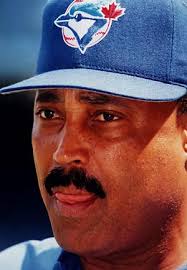
WHO IS CITO GASTON:
Awards and honors
_(1).jpg)
- In 1970, Gaston was selected for the All-Star Game as a reserve outfielder.
- Also in 1970, Gaston received the San Diego Padres team MVP award.
- In 1989, Gaston was the “Baseball Man of the Year” in Canada.
- In 1993, Gaston was voted “Sportsman of the Year”.
- Managed the American League team in the 1993 Major League Baseball All-Star Game.
- Managed the American League team in the 1994 Major League Baseball All-Star Game.
- The University of Toronto granted Gaston an Honorary Doctor of Laws degree in June 1994.
- In 1999, Gaston’s Blue Jays uniform name and number (#43) were honoured by addition to the Rogers Centre‘s Blue Jays “Level of Excellence”.
- In 2002, Gaston was elected into the Canadian Baseball Hall of Fame.
- Gaston was inducted into the San Antonio Sports Hall of Fame in 2006.
- In 2008, Gaston was presented a Negro League Hall of Fame Legacy Award (Jackie Robinson Award).
- In 2011, Gaston was inducted into the Ontario Sports Hall of Fame.
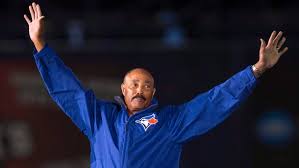
Cito Gaston

Clarence “Cito” Gaston was a National League outfielder from 1967 to 1978. At his best, he was an All-Star in 1970. He also made a vivid impression on the fans in Venezuela, where he won two batting titles in winter ball. However, Gaston attained much greater fame and respect as a manager. He became the first African-American skipper to lead his team to the playoffs and then to win a World Series. His Toronto Blue Jays won back-to-back championships in 1992 and 1993. “Cerebral, dignified, and tolerant” describe this imposing man’s best qualities as a leader.
Clarence Edwin Gaston was born in San Antonio, Texas, on March 17, 1944.2 His parents were Sammy Gaston and Gertrude Coley. Gaston spent his early years in the small city of Seguin, Texas, about 36 miles northeast of San Antonio, and at least one story states that he was born there rather than in San Antonio, his generally accepted birthplace. Clarence had five sisters. Cito’s friend of nearly five decades, Johnny Cardona Sr., said that Gertrude was remarried, to a man named Collins, when her son was young. Cardona recalled that Sammy moved to Oklahoma.
It’s quite possible that Gaston inherited some of his ability. Negro Leagues legend Ted “Double Duty” Radcliffe, from Mobile, Alabama, which has a long record as a hotbed of black baseball talent, said in his biography:
“You know who else lived in our neighborhood? Cito Gaston’s daddy. We used to call him ‘Big Boy’ ’cause he was a big heavyset fella — he could hit!”
Radcliffe’s collaborator, author Kyle McNary, states in another of his books that Gaston’s father was a Negro Leaguer. However, references for the “major” Negro Leagues do not show either a Gaston or a Collins who fits the bill. Whichever man it might have been, his experience may have come in a local circuit, the South Texas Negro League.
Cito was raised by a truck driver. Gertrude was a homemaker and at times a waitress. A San Antonio sports scribe wrote, “Religion was a big part of the Gaston family’s life. His grandfather was a Baptist minister and the Gastons often attended church twice on Sundays.”
Young Clarence had ambitions of being either a truck driver, a singer, or a major-league baseball player. Said another San Antonio sportswriter, “Some remember Gaston as a backyard preacher, the kid who always took the pulpit when the neighborhood children would gather to play church. Others remember him as a garbage man, who would trade his work gloves for a baseball.”9
At some point in his teens, Gaston acquired his nickname from a neighborhood friend in San Antonio. In a May 2002 online chat with Toronto fans, he said it came when he was 14, but earlier stories suggest that it was a few years later as he began to play amateur ball. At any rate, the man responsible was Carlos Thompson, who later became a police detective in San Antonio. He thought Gaston resembled a Mexican wrestler whose stage name was Cito.

Gaston grew up in both San Antonio and Corpus Christi. He attended Wheatley High School in San Antonio for a year. After that he went to both Holy Cross High in San Antonio and Solomon-Coles High in Corpus Christi, and sources are split as to where he actually graduated. However, it is clear that he was a three-sport star: baseball, basketball, and football. At Solomon-Coles, he was a pitcher. After graduating, “he returned to San Antonio, married and went to work on the midnight-to-dawn shift parking cars at a downtown garage.”
In 1961 the young man joined the Cardona Welders baseball team in San Antonio. Local businessman Johnny Cardona Sr. sponsored this amateur squad from 1954 to 1984. “There were some Anglos, a couple of black guys, and the rest were Mexican,” said Cardona. Among other opponents, the Welders faced South Texas Negro League teams such as the San Antonio Black Sox, from the East Side, the city’s traditionally African-American area. “When he first played for us, he was barefooted,” Cardona told Richard Oliver of the San Antonio Express-News in 2006. “He showed up and nobody paid much attention to him. He went up there and hit the ball all the way out there in deep center field. I bought him his first pair of spikes, and the rest is history.”
More recently Cardona said, “The deal was, you bring your spikes and glove, we furnish the uniform and everything else. But Cito didn’t have the spikes. I told him I’m gonna make an exception, I’m gonna call the sporting goods store. The owner, Rudy, he said, ‘Since when in the hell are you buying the guys spikes?’ I said, ‘Just this one, Rudy — don’t tell anyone else!”
Gaston worked for the San Antonio sanitation department in 1963. “I don’t regret that nine months,” Gaston told a sportswriter. “The work puts muscle on you.”
The Milwaukee Braves signed Gaston as an amateur free agent on March 22, 1964. George Vecsey of the New York Times told the story in 1989, as did Richard Oliver. Scouting legend Al LaMacchia, then with the Braves, stopped by Olmos Field in San Antonio to watch a Welders game. LaMacchia — later Cito’s colleague for many years in Toronto — recalled, “Great build on him, wiry and strong. First thing he did was to chase a ball in deep center field, so I knew he could catch. Then he fired a strike so I knew he could throw. Then he beat out a groundball, so I knew he could run. And then he hit a home run, so I knew he had power.” The stories went on to recount how LaMacchia beat out Houston scout Andy Andrews; the bottom line was that Gertrude said, “Sign the contract, Clarence.”
The young outfielder made his pro debut in 1964 with the Binghamton Triplets of the New York-Penn League (Class A), playing 11 games there before being sent to the Greenville Braves in the Class-A Western Carolinas League, where he batted .230 in 49 games. In 1965, with the West Palm Beach Braves of the Class-A Florida State League, Gaston suffered growing pains: .188 with 9 RBIs in 70 games. He was still bothered by a cracked shinbone that had gone undiagnosed during the 1964 season.

In 1966 Gaston joined the Batavia Trojans in the Class-A New York-Pennsylvania League and enjoyed much better success, leading the league in homers (28) and RBIs (104) while batting .330. He was selected to the league’s all-star team and was voted the league’s player with the brightest professional future. At the end of the season he played four games for the Austin Braves of the Double-A Texas League.
Back with Austin in 1967 after a stint in the Arizona Instructional League, Gaston had a good year (.305-10-70) with some standout moments. On June 12 he ended a scoreless pitching duel between Wally Wolf (El Paso) and Joe Cisterna (Austin) with a bases-loaded single in the ninth inning. On August 28 Gaston smacked a solo homer over the right-field wall to break a 2-2 tie with Amarillo. That earned him a cup of coffee with the Atlanta Braves in September. He pinch-ran for Tito Francona in his debut on September 14, flied out in his first, at-bat off Chicago’s Rich Nye, two days later, and tripled off Nelson Briles on September 24 for his first big-league hit. In nine games, he went 3 for 25 (.120). The young man got a special mentor as roommate: Hank Aaron, whom he credited with teaching him “how to be a man; how to stand on my own.”
After that performance Gaston headed south to play with Cardenales de Lara of the Venezuelan Winter League in the 1967-68 season. Perhaps he had difficulty adjusting to the city of Barquisimeto, or was homesick, or the league was beyond his capabilities. He played in just 31 games, with a modest batting line of .254-0-3. The Cardenales released him. In the mid-1980s, Gaston returned to the Cardenales as a batting instructor. He declared to journalist Rodolfo Mauriello that Lara’s management didn’t give him the chance to recover back in ’67-68.
Gaston started the 1968 spring with the Richmond Braves in the Triple-A International League. After 21 games (.239-2-8), he was sent down to Double-A Shreveport in the Texas League (.279-6-57 in 96 games).
That winter Cito’s career took a great step forward thanks to Rodolfo Mauriello. Then general manager of another Venezuelan team, Navegantes del Magallanes, Mauriello offered Gaston a contract. Gaston replied that he’d had a hard time with Lara the previous season. Mauriello told him not to worry about that because he now had one more year of experience.
With Magallanes Gaston led the league in hitting (.383) and RBIs (64). His 11 home runs ranked second behind Brant Alyea‘s 17. In Venezuela many people still remember a weekend “a la Gaston.” On December 8, 1968, the Navigators played the Caracas Lions. Cito won an exciting 13-inning game with a homer to the center-field bleachers. The next day, Magallanes played the La Guaira Sharks starting at 11 A.M. Again the game went to extra innings, as Gaston tied it with a bad-hop single over the head of his future teammate in San Diego, Enzo Hernández. He then won it in the 11th with a single to center.
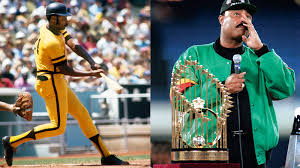
Moment of Appreciation for Cito Gaston. In 1970 he hit .318 with 29 dongs and a 5.1 WAR (good!). Later he became the only player in MLB history to have a 5+ WAR season and a negative career WAR (bad!). Then as manager of the 92-93 Blue Jays he won 2 WS rings (good!)… and TOTALLY REDEEMED HIMSELF!!
The league’s talent level was high, as evidenced by the long roll call of major leaguers who took part in those two games alone. Rollie Fingers, Mike Epstein, Bo Belinsky, Walt Hriniak, and Pat Kelly were some of the Americans, while the homegrown stars included César Tovar and Vic Davalillo.
The duo of Gaston and Kelly had special significance in Venezuela. According to a historian of Latin American baseball, “[They] became the first members of the Poder Negro — Black Power — era of the Magallanes team: African American import players who hit for power. Venezuelan sportswriters coined the term ‘Poder Negro’ after the incident at the Mexico City Olympics in 1968 when Tommie Smith and John Carlos raised black-gloved fists.”20 Carlos Tovar Bracho, a Venezuelan sportscaster, described Gaston and Kelly as a black version of Batman and Robin.
Gaston was taken by the San Diego Padres from Atlanta in the 1968 expansion draft, their last of 30 picks. In the spring of 1969, Sports Illustrated noted, “Their most exciting player may be a rookie named Clarence Gaston, a centerfielder with speed and power.”21 In his first complete major-league season, Gaston played in 129 games. However, in 391 at-bats, he hit just .230 with 2 home runs and 28 RBIs. The rookie was a very free swinger, especially for that era, striking out 117 times.
Gaston returned to Venezuela in October to play with Magallanes in the winter of 1969-70, but had to leave the team on December 20 because of a knee injury. However, he had enough at-bats (161 in 43 games) to win his second Venezuelan batting title, with an average of .360. His 8 doubles, 3 triples, and 7 home runs made him the leader in slugging at .578.

In 1970 Gaston enjoyed easily his best big-league season with the Padres. He played for the National League in the All-Star Game, going 0-for-2 with a walk. In 146 games, he hit 29 homers, drove in 93 runs, and batted .318. In addition to Hank Aaron, Gaston credited several men for his emergence. Richie Allen provided moral support, Billy Williams advised him to switch to a lighter bat, and San Diego batting coach Bob Skinner bolstered his confidence and adjusted his swing. Finally, Padres manager Preston Gómez stuck with him through nagging injuries and bad times during his rookie year.22 Much of the success came from within, though — Cito had learned about pitchers and learned how to relax.23
Gaston returned to play 35 games with Magallanes in the winter of 1970-71, but did not approach his former peaks (.260-3-27). Then he did not sustain his fine form with the Padres in 1971. He played in 141 games, but slumped badly to .228 in 518 at-bats. His power numbers declined to 17 homers (including two solo shots on May 4 in a 3-2 win over Atlanta) and 61 RBIs. Another notable moment came on June 16, as he got the only hit off Bill Stoneman at Montreal’s Jarry Park. Stoneman told Baseball Digest in 2005 that he regarded this outing as “The Game I’ll Never Forget” — even over his two no-hitters.
In 1970 Cito had shown at least some patience at the plate, walking a career-high 41 times to go with 142 K’s. In ’71, however, he drew just 24 passes and whiffed 121 times. On August 10 San Diego obtained speedy center fielder Johnny Jeter from Pittsburgh, viewing Gaston in turn as trade bait. However, the Padres wound up not dealing Gaston away that winter, which he again spent with Magallanes (.299-1-16 in 25 games).
During the spring of 1972, Jeter became the starter in center, and Gaston shifted to right. He would remain a corner outfielder for the rest of his career, seldom playing in center again. In 111 games, while his batting average picked up to .269, he dropped off further to 7 homers and 44 RBIs in 379 at-bats. One of those homers, off hard-throwing Don Gullett, provided the game’s only run as San Diego beat Cincinnati on September 15.
Johnny Jeter was a bust, and the Padres traded him to the Chicago White Sox. However, the team’s first-round draft pick in the 1971 secondary-phase draft, Johnny Grubb, was ready to take over center field in 1973. Gaston — who, as his 1973 baseball card noted, had “been plagued by injuries the past two seasons” — remained in right. He enjoyed a fairly decent season (.250-16-57 in 133 games).
The Padres made some more moves that winter. They picked up veteran first baseman Willie McCovey from the Giants and added Bobby Tolan from the Reds, who got most of the time in right. More than anything, though, Dave Winfield blossomed as the full-time left fielder. Gaston became the fourth outfielder (.213-6-33 in 106 games).
That November, San Diego dealt Gaston back to the Atlanta organization for reliever Danny Frisella. In 1975 he played in 64 games for the Braves (.241-6-15). Then, in the winter of 1975-76, at age 31, he reappeared in Venezuela to play with Magallanes. It was a successful winter (.296-5-31 in 60 games).
Gaston remained with Atlanta in 1976. He remained a reserve, although he felt he was still capable of making a greater contribution. In 134 at-bats (69 games), he posted his best average in years (.291) to go with 4 home runs and 25 RBIs. On August 3, in a rare start at first base, he hit two homers and drove in five runs (a career high) off San Diego’s Rich Folkers. It was the second time he’d connected twice in a game.

The 1976-1977 season was Gaston’s last in Venezuela. With La Guaira, he appeared in 56 games (.262-4-38). He was taken as a reinforcement player by Magallanes to play in the 1977 Caribbean Series. Gaston joined a lineup that already had Dave Parker and Mitchell Page, the latest members of the Poder Negro tradition. He batted .300 with 4 RBIs in the Series (won by the Dominican team, the Licey Tigres). Gaston’s career totals in Venezuela (seven seasons) were 31 homers, 207 RBIs, and a .307 batting average.
Gaston remained with the Braves in 1977 (.271-3-21 in 56 games) and most of 1978 (.229-1-9 in 60 games). On September 22, 1978, the Pittsburgh Pirates purchased his contract. With the Pirates at the tail end of that season, he was 1-for-2 in two games — which turned out to be his last in the majors. On October 11, Pittsburgh declined to offer Gaston a contract for the 1979 season.
Gaston decided to play for the Santo Domingo Azucareros in the short-lived Inter-American League, which featured many veteran big leaguers hanging on. Before the league folded in June, he played in 40 games (.324-1-14 in 148 at-bats). Then he left for the Mexican League to play for the León Bravos. There he appeared in 24 games (.337-1-8). In 1980 he returned to León and played in 48 games (.238-4-27). Gaston then retired as a player.
In 1981 Hank Aaron helped his friend find a spot with the Braves as their minor-league hitting instructor. “I had finished playing and Hank got me back in baseball,” Gaston said. “He called me a couple times and asked me to come back as a coach. I said no. The third time he called, I said yes.”
The following year, 1982, Bobby Cox became manager of the Toronto Blue Jays after Ted Turner fired him in Atlanta, and took Gaston along as his batting coach. As the sixth-year expansion club matured into a winner, Gaston helped develop the likes of George Bell, Jesse Barfield, Lloyd Moseby, and Willie Upshaw. “He made a huge impression on journalists and baseball people as the rock of the clubhouse during two jittery pennant races in 1985 and 1987,” the New York Times’s George Vecsey wrote.
Jimy Williams was fired on May 15, 1989, and Gaston stepped in as interim manager — the fourth black man to manage in the majors. The organization had actually been considering him for a greater role for some time:
“Two springs ago, in the roiling wake of The Campanis Affair, Blue Jays General Manager Pat Gillick approached [Cito Gaston] and asked if he would be interested in managing,” wrote a Los Angeles Times sportswriter. “Not the Blue Jays quite yet, but winter ball. It would be an apprenticeship, servicing both the Jays’ belief that Gaston might make a useful manager someday amid baseball’s fresh demand for minority candidates. No matter, Cito Gaston wasn’t hot on the idea. His father was ill, his second marriage (with two children added to his own two) was just getting its sea legs and life as a coach wasn’t at all intolerable. So he said no.”

Gillick was hoping to hire Lou Piniella but was unable to do so. After encouragement from his players and Sparky Anderson, Gaston took the job full-time. Toronto was 12-24 when he took over but went 77-49 the rest of the way, winning the AL’s Eastern Division (but then losing in the playoffs to Oakland). George Vecsey’s article from the end of the season that year contained some other intriguing quotes:
“I never thought I’d be a manager. But once it happened it’s pretty much what I expected. The worst part is the questions from the press. When the games start I relax.” With regard to being a black manager, he commented, “I don’t get too emotional about it. To me, it doesn’t matter what color you are. I only think about it when you guys bring it up.”
The Jays finished second in the AL East behind Boston in 1990. They recaptured the division in 1991, but lost the pennant to Minnesota. The next year, though, in late August David Cone joined a strong talent base including Joe Carter and Roberto Alomar. Toronto was prepared to move to a higher level. Their field leader was feeling better too. George Vecsey noted, “Gaston showed courage by coming back from back surgery after 1991, showing more energy and less pain. He rarely complained or lost his temper, becoming ever more of a yup-and-nope guy.” That same article compared him to “strong and silent” types such as Gil Hodges and movie star Gary Cooper.
The Blue Jays beat Oakland in the AL playoffs in 1992 and then won their first World Series on October 24 by defeating the Atlanta Braves in six games. The winning run in Game Six, an exciting 4-3, 11-inning affair, was driven in by Dave Winfield. The veteran was then in his 19th season, 18 years after his emergence in San Diego prompted Gaston’s trade.
George Vecsey observed, “Gaston has been skewered by a few critics in Toronto, which is normal in these critical times. ‘I don’t know, I don’t feel any animosity in my heart toward the media,’ Gaston said. … He admitted he had been hurt by inscrutable managers when he was a decent outfielder in the ’70s, and he has tried to be open with his players. ‘In this game, you meet good people and you meet bad people,’ Gaston said. ‘I guess I learned that everybody has feelings.’”

In 1993 Gaston and the Blue Jays again won the World Series. Joe Carter’s memorable home run lifted the Jays over the Philadelphia Phillies in Game Six. He became the first manager to win two consecutive Series since Sparky Anderson did it with the Cincinnati Reds in 1975-1976.
Gaston continued managing Toronto until the 1997 season was almost finished. But he never had another winning record — he came under fire for not developing good relationships with younger players like John Olerud and Shawn Green, and he lost support in the press. His none-too-subtle hints that racism was a factor did not help his cause. (He followed with a qualified apology.
Gaston’s total record as manager when he lost his job was 683-636. In July 1999 he became the fourth of nine men on the Blue Jays Level of Excellence, and his two World Series titles gained him entry into the Canadian Baseball Hall of Fame in 2002.
Gaston returned to the Jays as hitting coach for the 2000 and 2001 seasons. Yet while other teams had considered making him their manager, for over a decade he never landed another top job. Blue Jays President and CEO Paul Godfrey called it “the one big mystery in baseball, why this elegant, decent man had never been offered another job in baseball.” After the 1999 season, Gaston interviewed with the Indians and Brewers; the Angels were also interested, but he withdrew from consideration for family reasons. He came closest in November 2003, when the White Sox chose Ozzie Guillén.
In recent years, Gaston has served, along with former Blue Jays pitcher Pat Hentgen, as a club ambassador and special assistant to Godfrey. He also made occasional appearances at spring training in Dunedin, Florida, as a guest coach. As of 2018 Gaston lived in nearby Oldsmar with his third wife, Linda, whom he married in 2003. Gaston thought the baseball life was why his first marriage, to Lena Green, ended in divorce. That union produced two daughters, Rochelle and Shawn. In the late ’80s, Gaston married a Canadian woman named Denise; that marriage lasted into the early 2000s.
Gaston was inducted into the San Antonio Sports Hall of Fame in 2006. He appeared to be peacefully retired, golfing and traveling the world. According to a Toronto sportswriter, “He eventually started to turn down clubs that wanted him to interview for vacant jobs.” The suspicion lurked that he was being used as a token candidate.37 But life changed for Gaston on June 20, 2008.
Amid a slump that saw the team win just four out of 17 games, Blue Jays general manager J.P. Ricciardi fired manager John Gibbons. “We know we’ve got a better team than this,” Ricciardi said. “Right now, we just needed something to spark us, and I think Cito is the right guy for that.” He cited Gaston’s experience, respect, and credibility. Gaston observed that he didn’t know the hitters as well as he did the last time Toronto called on him — but overall, he said, “I don’t think the game has changed.” The Jays responded with a 51-37 record after Gaston’s return, and late in the 2008 season Toronto gave him a two-year contract extension. In October 2009, he announced that his last season would be the upcoming one. After the 2010 season Gaston retired, left the dugout, and took a front-office consultant’s post. He worked through 2015, and then retired from that position as well.
Perhaps his fondest memory? “The 1989 team was one of the most fun teams that I have ever managed,’’ Gaston said. “I took over from Jimy and we came back to win the division. That was a team that could manufacture runs anytime we wanted to. All of the teams that I’ve had, you have to adapt as a manager and go from there.”
Perhaps the best expression of Gaston’s even-keeled approach to baseball and life goes back to his earliest days as manager. As he told George Vecsey in 1989, “I don’t mind if the guys laugh after we lose. They’ve got to get themselves ready for the next day. The same when we win. Enjoy it, but you can’t take it with you. You’ve got to start again tomorrow.”
Gaston proudly watching Roberts lead LA
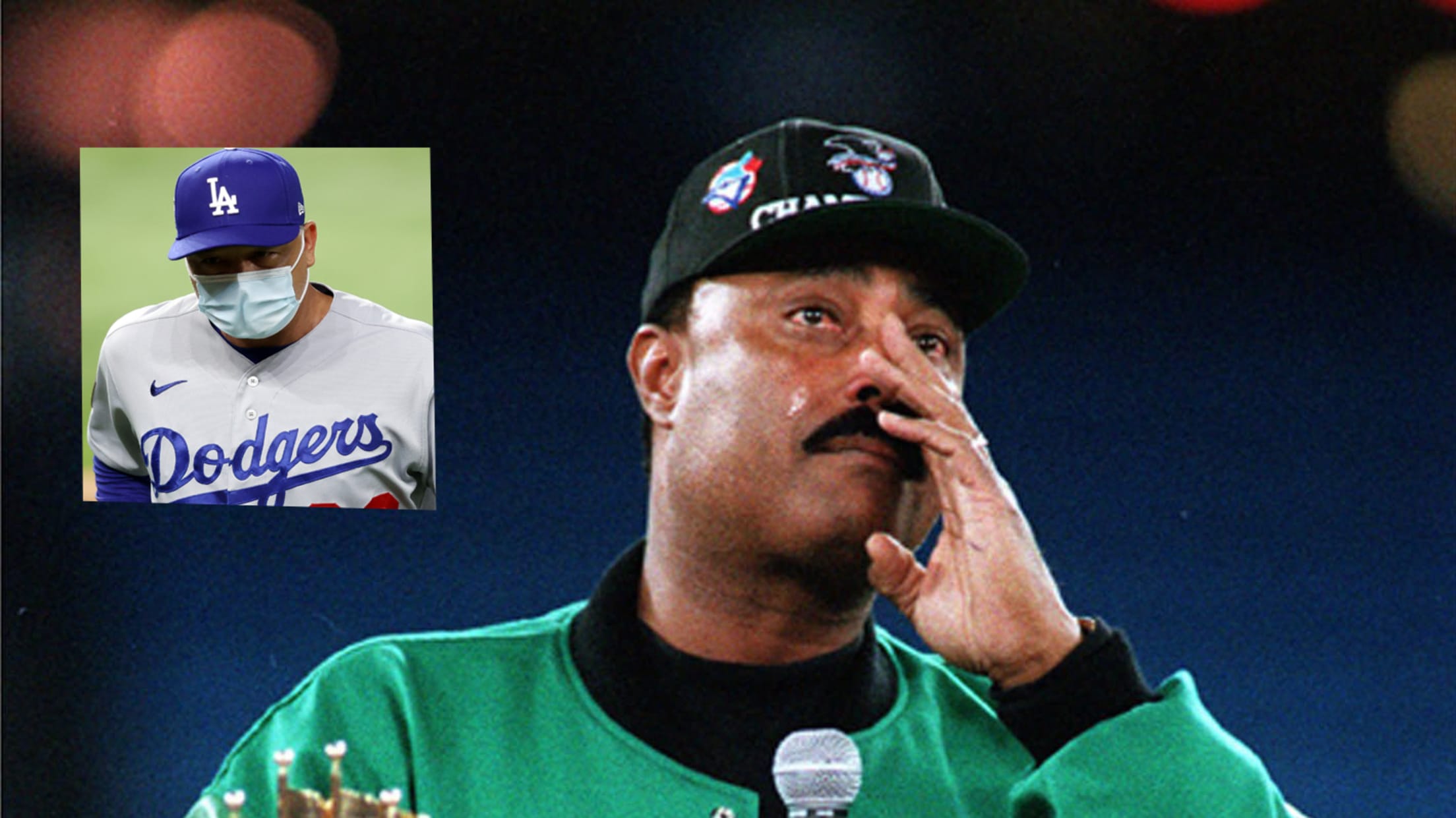
Cito Gaston has had a busy month, between organizing a home remodeling project and recovering from shoulder replacement surgery. Of course, he’s watching a lot of postseason baseball, too.
As a Florida resident, he has friends who work for the Rays. He also has a connection to the Dodgers’ manager, even though they haven’t been in direct contact recently.
With one more victory, Dave Roberts can follow Gaston as the second African-American manager to win the World Series.
“I’m so proud of him and what he’s accomplished,” Gaston told MLB.com in a telephone interview prior to Tuesday’s Game 6. “Playing this season during a pandemic, it hasn’t been easy for these guys. You only played 60 ballgames. You had the additional round of playoffs. Then you played five games in a row, seven games in a row, all the way to the World Series.
“Being African-American, being a Black man, I’m very proud of him and happy for him. He’s a good guy to have that legacy and carry it forward.”
Gaston, 76, managed the Blue Jays to consecutive World Series titles in 1992 and ’93. Since then, three African-American managers have won pennants: Dusty Baker with the Giants in 2002; Ron Washington with the Rangers in ’10 and ’11; and Roberts with the Dodgers in ’17, ’18, and ’20.
“They’ve been close, and it took me a few times to win, too,” Gaston said, referring to Toronto’s American League Championship Series losses in 1989 and ’91. “What I see in the [Dodgers] is that they have a lot of confidence. My guys were always that way. They’d say, ‘Why show up if you’re not going to win?’ This Dodgers team is very athletic, very talented. You’ve got guys who can play second base, left field and right field.
“Dave has done well, dealing with a lot of different guys. One thing that’s changed in the game is you see pitchers who are throwing pretty well after 4 2/3 innings, and you take them out. They’re not going to be too happy with you, but Dave is wise enough to let them know, ‘Hey, we’re all here to win, and if we all stay with this program, we’re going to win ballgames and have a great time.’ [Rays manager Kevin] Cash has done a great job with that, as well.”
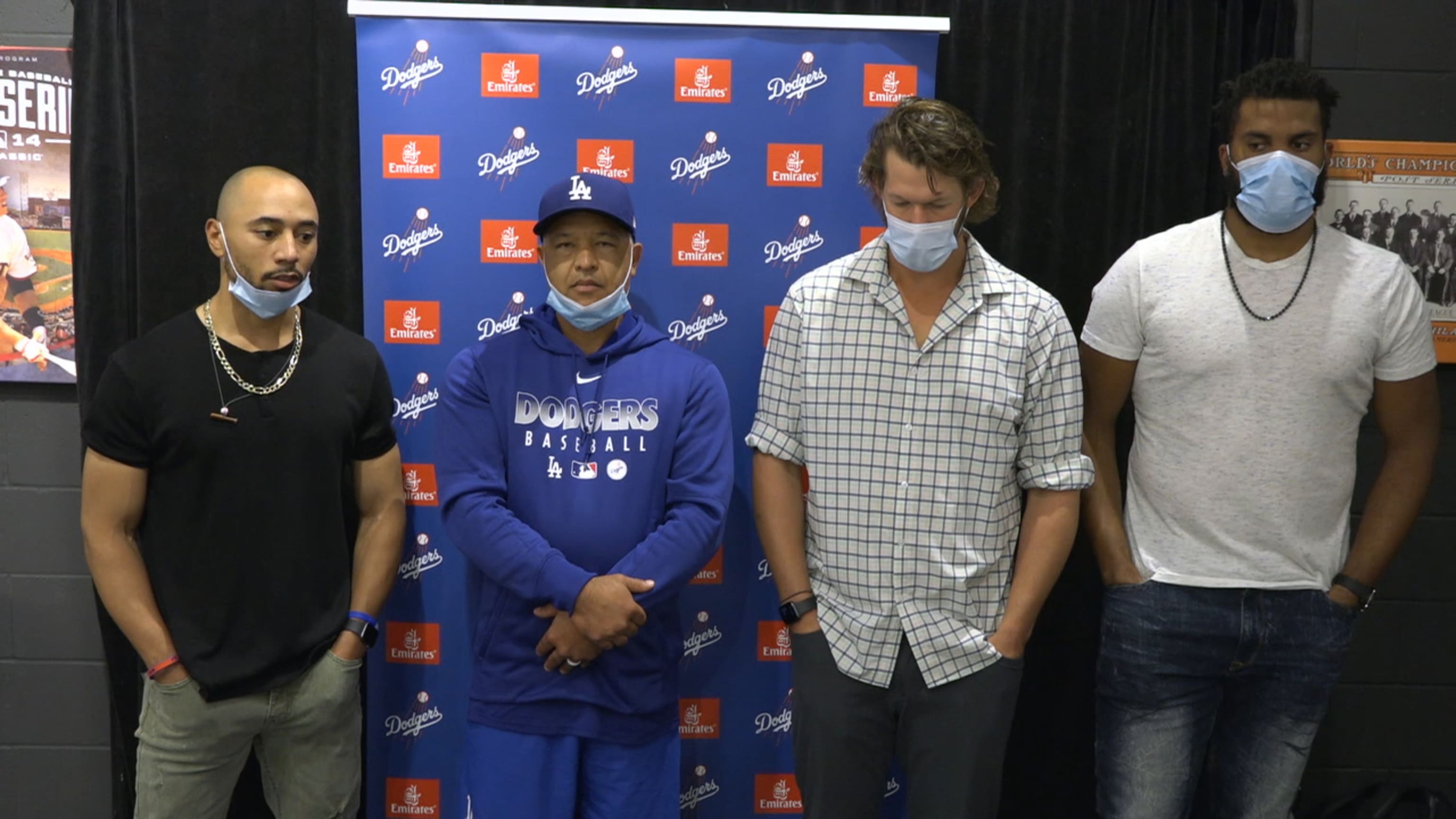
Gaston followed the news from his home as Major League teams, including the Dodgers, declined to take the field in late August after the shooting of Jacob Blake by police in Wisconsin. In one of the season’s enduring images, Roberts stood with his star players — Mookie Betts, Clayton Kershaw and Kenley Jansen — as they spoke emotionally about their decision at a press conference.
“That was a very proud moment for me, to see Dave standing there with his players,” Gaston said. “As a Black person in the U.S. — as a person of any color — it meant so much that these guys stood up and said, ‘Enough is enough.’ I’m so proud of them.
“It’s tear-jerking for me, even as I talk about it now.”
Roberts and Baker were the two African-American managers in the Major Leagues for most of this season, prior to Lloyd McClendon finishing the year as the Tigers’ interim manager.
Baker’s Astros came within one victory of the AL pennant, which would have set up the first matchup of Black managers in the World Series; Roberts and Baker had met in the postseason once before, during the 2016 National League Division Series while Baker was managing the Nationals.
This year, Baker became the first manager in MLB history to lead five franchises into the postseason. Baker, a Braves teammate of Gaston’s during the 1970s, leads all active managers with 1,892 career victories and ranks 15th on the all-time wins list.
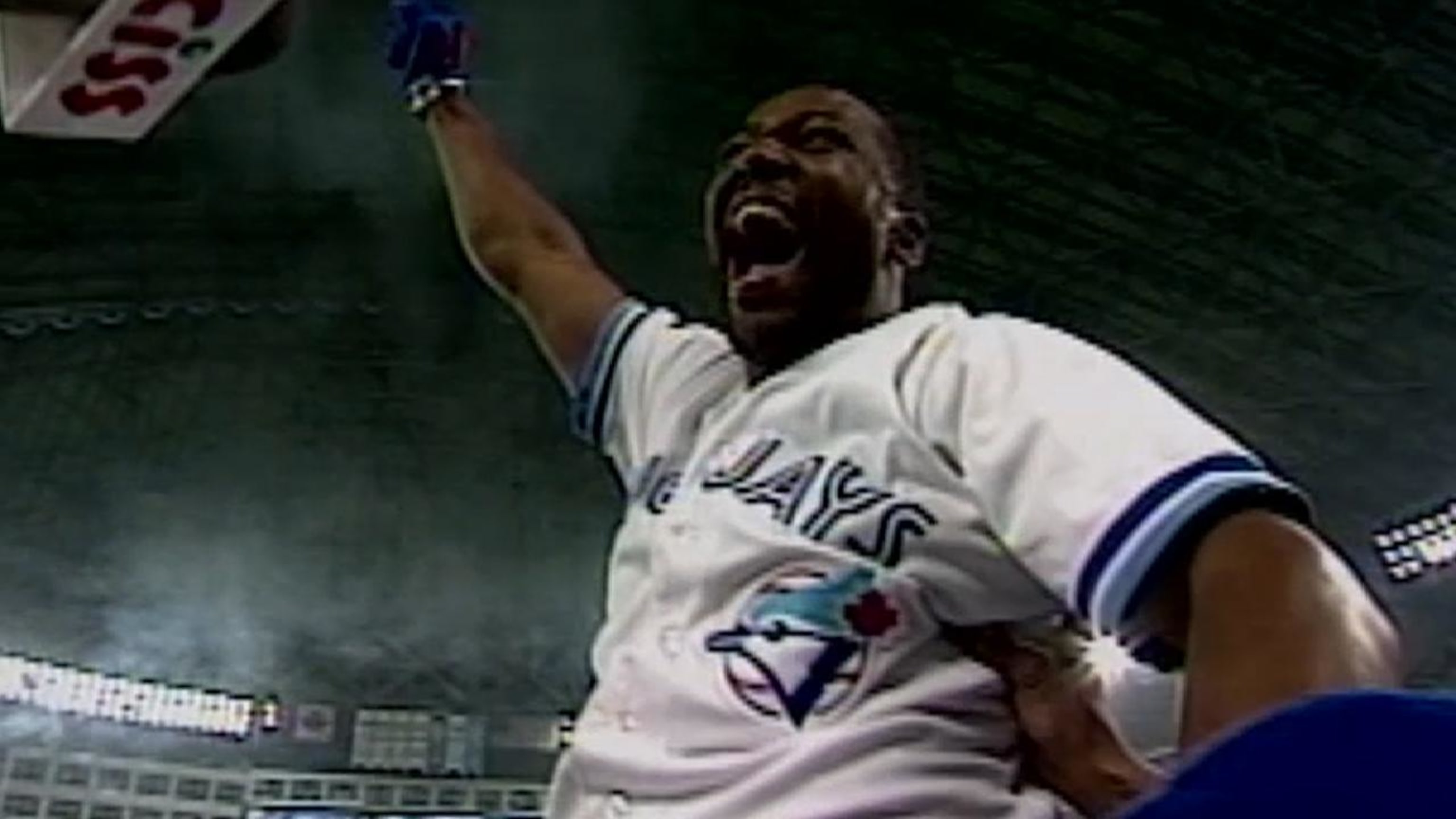
“That’s Hall of Fame stuff right there,” Gaston said of Baker’s résumé.
Roberts, 48, was born in Japan to an African-American father and Japanese mother. He is the only manager of Asian descent to lead his team to the World Series.
Multiple African-American candidates have interviewed for managerial jobs already this offseason, including McClendon, Dodgers first-base coach George Lombard and Yankees hitting coach Marcus Thames with the Tigers. The Boston Globe reported that the Red Sox have interviewed Cubs third-base coach Will Venable for their vacancy.
“I would hope, if Dave wins, that’s going to bring more attention and opportunity for minorities to become managers,” Gaston said. “I’d like to see Dusty win one World Series before he leaves, too. He’s done so many great things. They’re both showing how much success Black managers can have in the game.
“It makes me very proud. I always go back to the people who had to stand up for us to have this chance, and it all starts with Jackie Robinson.”




