
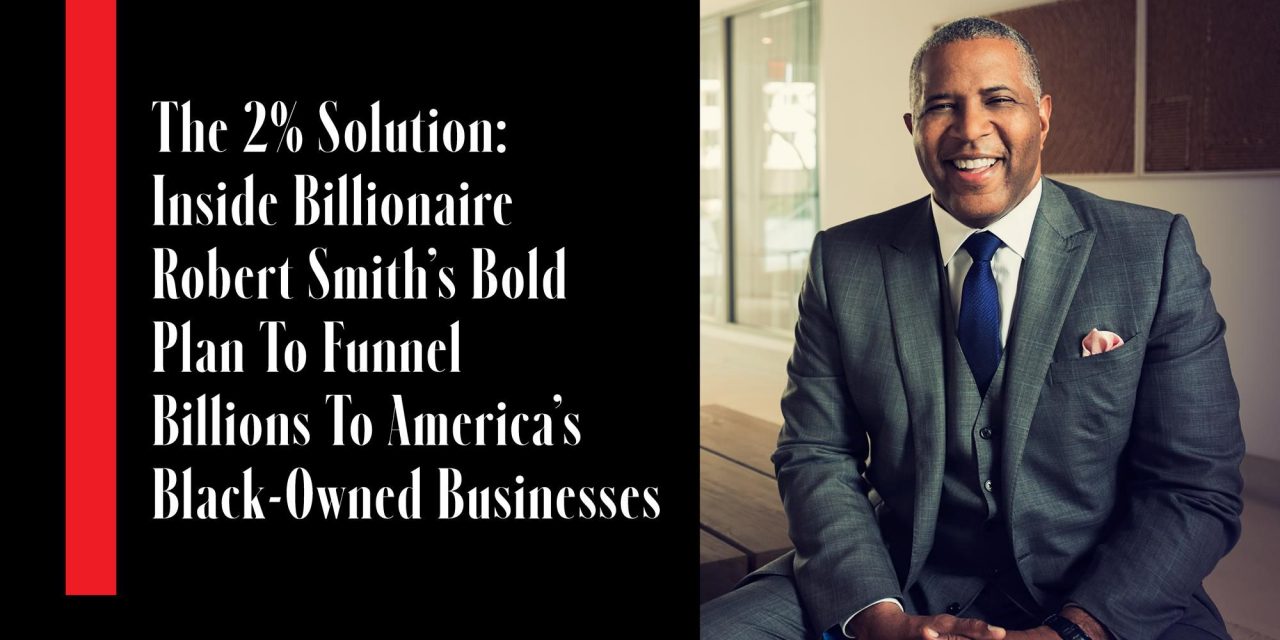
The nation’s wealthiest Black investor says the best way to begin to reverse Corporate America’s history of structural racism is for big banks and large companies to spend the next ten years investing directly in banking, telecom, technology, education and healthcare infrastructure to benefit the Black community.
Robert F. Smith, the private equity billionaire who is the nation’s richest Black person, said on Thursday that large corporations should use 2% of their annual net income for the next decade to empower minority communities. Smith made the comments after circulating a plan among CEOs that first calls on big banks to capitalize the financial institutions that service Black-owned businesses and minority-run entrepreneurial ventures.
In a keynote address he gave at the Forbes 400 Summit on Philanthropy, Smith, 57, said Black and minority communities have been abandoned by large banks and are starved of the capital needed to build businesses and local institutions. Smith argued that pumping in what he described as “reparative” capital and investing directly in financial architecture would be a fast way to advance economic justice for Black Americans.
“Nowhere is structural racism more apparent than in corporate America,” Smith said. “If you think about structural racism and access to capital, 70% of African American communities don’t even have a branch, bank of any type.”
In recent days, Smith, whose net worth is estimated to be $5 billion, has been sharing a concrete plan with the nation’s business leaders that argues that an investment equal to 2% of net income over the next decade would be a small step toward restoring equity and mobility in America. He has implied that America’s big corporations should feel compelled to support such a plan given the exclusionary practices of many industries over several decades. Smith made the case that the average American household charitably donates 2% of its income annually and is asking corporate America to do the same.
During the pandemic, Smith discovered the structural racism in banking firsthand as he tried to help Black businesses and banks that serve Black communities obtain Paycheck Protection Program loans. Smith found that Black-owned businesses faced numerous structural obstacles and as a result had trouble accessing the emergency financing being provided by the federal government through the banking sector.
The balance sheets of the nation’s 4,700 banks are made up of $20.3 trillion of assets, but only 21 of those banks are Black-owned or led, and they have total assets of just $5 billion, less than 1% of America’s commercial banking assets. Blacks make up 13% of the population of the United States.
In his talk on Thursday, Smith pointed out that the net income of the ten largest U.S. banks over the last ten years was $968 billion. He figured just 2% of that would amount to $19.4 billion, which could be used to fund the core Tier 1 capital of community development banks and minority depository institutions that primarily service Black communities. Smith was also open to the idea that the capital could be donated in a tax-advantaged way to a nonprofit entity that could provide the core bank capital.
Smith thinks the federal government could supercharge the effort by leveraging up the provided capital with the Term Asset-Backed Securities Loan Facility the Federal Reserve established to support consumer and business credit during the pandemic.
“The deprivation of capital is one of the areas that creates a major problem to the enablement of the African American community,” Smith told the more than 200 top philanthropists who attended the 9th annual Forbes philanthropy summit, which this year was held on Zoom. “The first thing to do is put capital into those branch banks to lend to these small businesses to actually create an opportunity set . . . drive it into these small businesses, which employs 60%-plus of African Americans.”
Smith envisions the nation’s banking sector could provide billions of dollars of capital to Black-owned banks and community development banks, with some of the funds used to digitize these lenders.
In a way, Smith is proposing a private sector solution to reparations, the idea that the federal government pay financial compensation to Black Americans who are the descendants of slaves. Smith believes Black communities have experienced systemic inequality and exclusion in corporate sectors beyond finance, including healthcare, telecommunications and technology. The net income of the biggest U.S. companies in just those sectors was $1.3 trillion combined over the last decade and 2% of those profits, or some $25 billion, could be used to do things like strengthen healthcare infrastructure in minority communities, equalize broadband access, fund STEM education at historically Black colleges and digitize minority small businesses.
Through his plan, Smith envisions the nation’s banking sector could, over the next ten years, provide billions of dollars of capital to Black-owned banks and community development banks, with some of the funds used to digitize these lenders. His plan calls for the telecom and tech sectors to provide money to help prepare 180,000 students at America’s historically Black colleges for the jobs of the future, and to digitize one million minority small businesses.
Smith, who has an engineering degree from Cornell University, is the founder of Vista Equity Partners, the nation’s biggest private equity firm specializing in software transactions. Part of Vista’s stunning success has been built on Smith’s detailed and secret playbook for running software companies, which has helped Vista achieve some of the private equity industry’s best financial returns.
Now, Smith believes his playbook for economic justice could not only ensure Black Americans have better access to opportunity, but also increase the nation’s economic activity by more than $1 trillion annually.
“I think that will show Americans there is hope, there is an opportunity for the American dream to now be revitalized,” Smith said on Thursday. “And frankly, to give us all confidence that we can actually make this a better country and a better place to live.”
Robert F. Smith was born to two working-class parents in a predominantly African American, middle-class neighborhood in Denver, Colorado. From an early age, his parents stressed the importance of giving back and supporting his community. He first learned that everyone had a role to play in creating a better world from watching his parents, who donated their limited resources to charities on an ongoing basis, no matter what was happening in their personal lives.
Smith earned a degree in chemical engineering from Cornell University. After graduating, he began working in industry in Applied Research and Development and received two US and two European patents and numerous awards. He graduated with honors from Columbia Business School and entered the investment banking in Mergers & Acquisitions for Goldman Sachs in New York City and later San Francisco. To empower technology companies in the enterprise software market, Smith launched Vista Equity Partners, a global investment firm, in 2000. Today, Smith is Vista’s Chairman and CEO. Under his leadership, the firm’s portfolio has grown to include some of the world’s leading enterprise software companies.
Throughout his life, Smith’s commitment to philanthropy and equity has never wavered, and finding ways to make a difference in the communities where he lives and works is central to his character and approach to life. During his 2019 commencement address at Morehouse College, a historically Black institution, Smith surprised the graduating class by pledging to pay off the entire class’ student loan debt — a $34 million gift that helped nearly 400 graduates. He is also a major donor to the National Museum of African American History and Culture, the Chairman of Carnegie Hall, and the Chairman of Robert F. Kennedy Human Rights, among many others.
Robert F. Smith is a business leader, investor in transformative companies, a champion for diversity and inclusion and a steward of culture, the environment, equity and education. Learn about Smith’s early life, the beginning of his career and the founding of the technology investment firm — Vista Equity Partners — and his dedication to serving and giving back to his communities and our planet through innovative and expansive philanthropic giving.
Robert F. Smith was born in a working-class neighborhood of Denver, Colorado in 1962. Both of his parents cared deeply about giving back, and when he was just an infant, he went with his mother to the March on Washington where Dr. Martin Luther King delivered his historic “I Have a Dream” speech. Each month, he watched his mom send off a $25 check to the United Negro College Fund – no matter their financial situation. These experiences helped instill in him the belief that everyone can be a part of making the world a better and more equitable place.
While still in high school, Robert was initially denied a prestigious internship at Bell Labs because they were reserved for college students, but his persistence in calling the company every week for five months paid off when he was eventually offered the position.
Smith continued to work at Bell Labs during his summer and winter breaks while completing his chemical engineering degree at Cornell University. After graduating from Cornell, he worked as an engineer for several top companies – including Kraft General Foods, where he was granted two patents in the U.S. and two more in Europe – before going on to earn his MBA with honors from Columbia Business School.
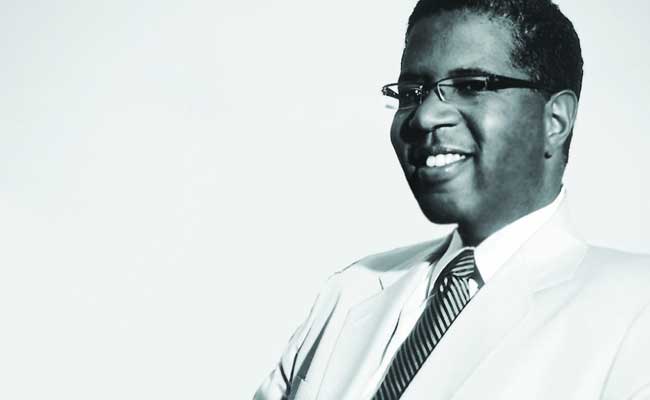
In 1994, Robert joined Goldman Sachs to help develop more robust investment banking in technology, starting out in New York and later moving to Silicon Valley. He became the Co-Head of Enterprise Systems and Storage, where he assisted massive technology companies like Hewlett Packard, IBM, eBay and Apple with mergers and acquisitions. He was the first person at Goldman Sachs in San Francisco to focus on that specific area of financing.
“We can transcend the script of a pre-defined story, and pave the way for the future that we design…tap that power, that conviction, that determination within us”.
– Robert F. Smith
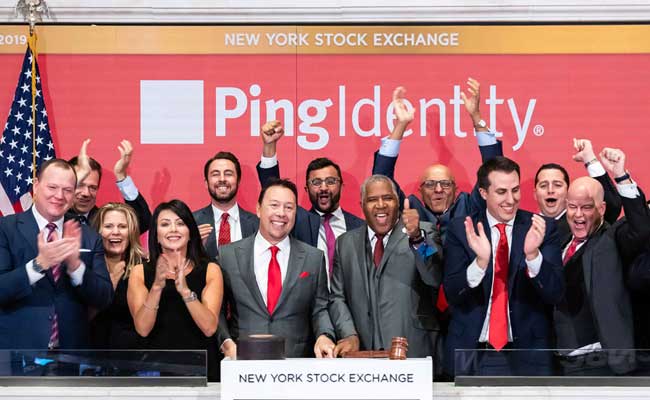
Founder, Chairman and CEO
of Vista Equity Partners
In 2000, Robert F. Smith founded Vista Equity Partners to invest in innovation by way of enterprise software and technology solutions. Today, he serves as Chairman and CEO of Vista, directing the firm’s strategy, governance and investor relations. In 2011, Vista opened its office in Austin, Texas, and was recognized as the most active investor in the software industry by Berekery Noyes.
Smith was recognized by Forbes as one of the 100 Greatest Living Business Minds in 2017 for his business acumen and leadership skills.
Community Board Positions
Chairman of Robert F. Kennedy Human Rights
Member of the Board of Overseers of Columbia Business School
Member of the Cornell Engineering College Council
Trustee of the Boys and Girls Clubs of San Francisco
Chairman of Carnegie Hall — In this role, Smith champions the arts and funds education programs for K–12 students. He is the first African American to hold this role.
Philanthropy
Robert F. Smith believes deeply in the need to give back and support communities. Throughout his life, Smith has continuously supported a number of philanthropies and causes. In 2017, he joined the Giving Pledge, pledging to donate a majority of his net worth during his lifetime. And in recognition of his bold, expansive philanthropy, The Chronicle of Philanthropy named Smith one of the “Philanthropy 50.”
Smith’s philanthropy has supported major education institutions, social justice organizations as well as the arts and scientific research for breast cancer, colon cancer, and other diseases.
Smith made history when he donated $20 million to the National Museum of African American History and Culture, which was the largest donation by an individual to the museum in its history. In 2019, he stunned Morehouse College graduates during his commencement speech by announcing a commitment to pay off all student loan debt for the entire class — a $34 million gift.
Following this donation, Smith expanded his debt-eliminating efforts and helped create the nonprofit organization the Student Freedom Initiative, which will work to reduce the student loan debt taken on by STEM students attending HBCUs. The Initiative was initially funded with a $50 million donation by the Fund II Foundation, which was followed by a personal donation of an additional $50 million by Smith himself.
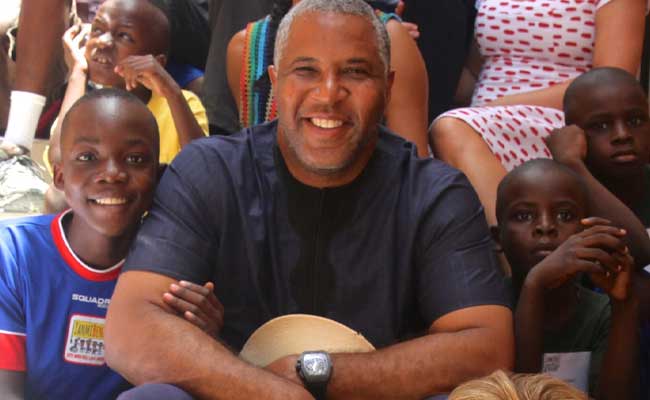
Beyond his personal giving, Smith is also the founding director and President of the Fund II Foundation, which is focused on five pillars: preserving the African American experience, defending human rights, expanding music education, protecting the environment, and sustaining critical American values.
Selected Honors and Awards
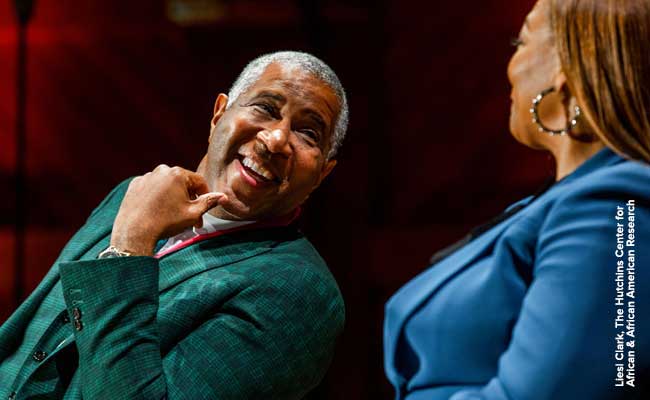
- Carnegie Medal of Philanthropy
- Texas Business Hall of Fame (2019 Inductee)
- UNCF President’s Award
- Congressional Black Caucus Foundation Chair’s Award
In recognition of his business accomplishments and philanthropy, Robert F. Smith has received numerous awards and honors.
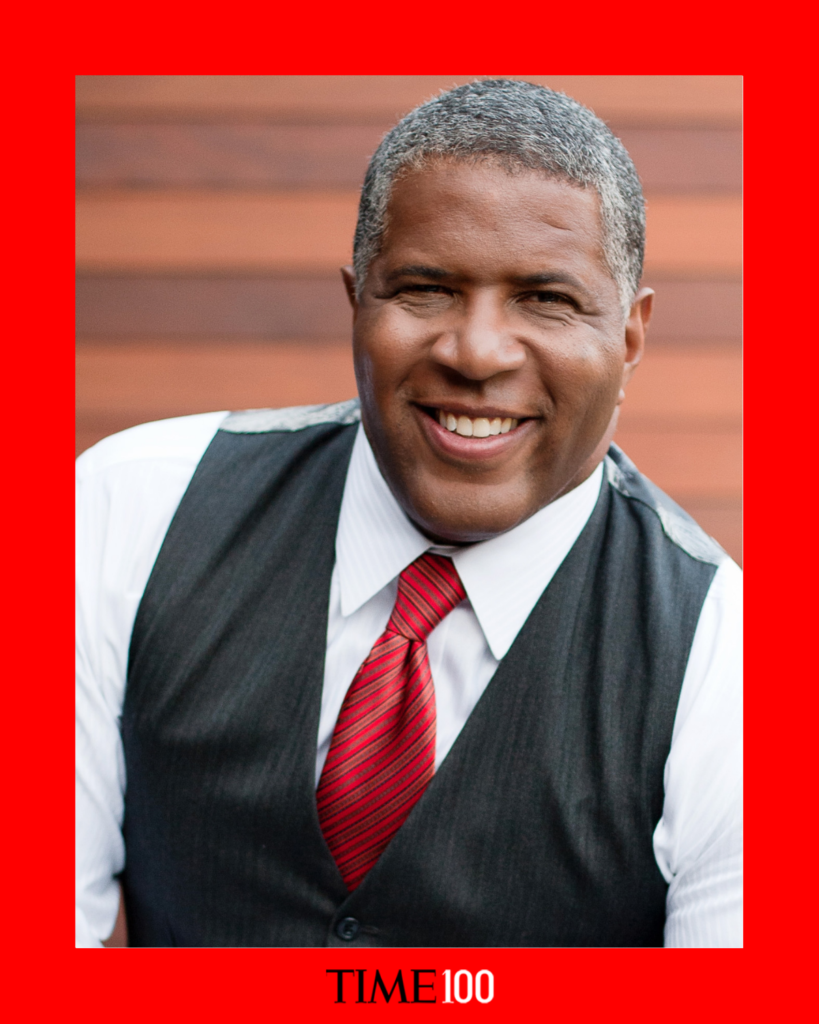
TIME Magazine 100 Most Influential People, 2020
Robert Smith was named to the Time 100 list in 2020 in recognition of his extraordinary work in liberating the human spirit through his philanthropy, investments, and advocacy for racial and economic justice for communities of color. Smith’s work, words, and resources are creating new opportunities for Black Americans and underserved communities throughout the US.
Harvard’s W.E.B. Du Bois Award, 2019
Smith was awarded the W. E. B. Du Bois Medal in 2019, which is Harvard University’s highest honor in the field of African and African American studies. He was recognized for “changing lives and for forever and profoundly transforming the global philanthropic and businesses landscape.”


Carnegie Medal of Philanthropy, 2019
In 2019, Smith was awarded the Carnegie Medal of Philanthropy in recognition of his bold philanthropy, investments in communities, and his strong calls for others to join him in giving back. The award honors philanthropists who reflect the values of Andrew Carnegie and his philosophy of giving—that the surplus wealth of the few should be administered “for the good of the people.”
Inductee into the Texas Business Hall of Fame, 2019
Smith was inducted into the Texas Business Hall of Fame in 2019 after being recognized by the general public and then selected by living Hall of Fame members. Inductees are evaluated by their accomplishments in business and contributions to their community.
UNCF President’s Award, 2019
In 2019, the UNCF honored Smith with their President’s Award, which is an honor given to individuals who have helped “shape the African American story by embodying the values and aspirations that UNCF represents” or individuals who have contributed resources necessary for UNCF students to succeed.
Honored by National Park Foundation, 2018
The National Park Foundation awarded Smith the title of “Honorary Ranger” in recognition of his dedication to African American history and cultural preservation at national parks across the country.
Forbes 100 Greatest Living Business Minds, 2017
In 2017, Smith was named one of Forbes’ “100 Greatest Living Business Minds”, recognizing him as one of America’s top business innovators.

Columbia University BBSA Distinguished Alumni Award, 2017
Columbia University’s Black Business Students Association (BBSA) named Smith as a recipient of their “Distinguished Alumni Award” in 2017. The BBSA at Columbia University exists to support Black business school students while they are pursuing their degrees and beyond.
Congressional Black Caucus Foundation Chair’s Award, 2016
Smith was honored with the Congressional Black Caucus Foundation Chair’s Award in 2016. The Congressional Black Caucus Foundation is a non-partisan, nonprofit, public policy, research and educational institute that works to benefit the global Black community.

Ripple of Hope Award from Robert F. Kennedy Human Rights, 2010
In 2010, Smith was awarded the prestigious Robert F. Kennedy Ripple of Hope Award, which “celebrates leaders of the international business, entertainment, and activist communities who have demonstrated a commitment to social change.” Past award recipients include Barack Obama, Archbishop Desmond Tutu, Bono, John Lewis, and Tim Cook. Smith is Chairman of Robert F. Kennedy Human Rights.




