

In 2014, former NBA player Al Harrington started a cannabis brand named after his grandmother Viola. Now, Viola is growing its multi-state footprint and expanding its product portfolio. Founder and CEO Harrington spoke with New Cannabis Ventures about applying for licenses in new states, the importance of social equity and the company’s recent investment round. The audio of the entire conversation is available at the end of this written summary.
Family Inspiration
In 2011, Harrington’s grandmother came to see him play when he was with the Denver Nuggets. She was suffering from glaucoma and taking a multitude of medications that were not alleviating her symptoms. Harrington suggested cannabis. After some initial skepticism, his grandmother agreed to give it a try. The positive impact it had on her changed the way Harrington looked at cannabis.
He grew up in Orange, New Jersey and saw the effects of the War on Drugs in his community. After seeing how cannabis helped his grandmother, he started to learn more about the medical benefits of the plant, and he decided to make an investment in the space a year later.
The Leadership Team
Harrington co-founded Viola with Dan Pettigrew. Together, the pair drove around Colorado visiting different grow sites and building a business plan. The team has since grown to include members such as COO Sameer Kumar, CFO Matt Hathaway, and Chief Compliance Officer Adam Day. The company is looking to fill additional roles, including CMO and CRO.
Colorado Roots and Organic Growth
Viola started in Colorado but now has a multi-state presence with a 40-acre farm in Oregon and a 50,000-square-foot indoor cultivation and manufacturing facility in Detroit, Michigan. The company also acquired a 35,000-square-foot cultivation and manufacturing facility in Adelanto, California.
Viola is open to the possibility of strategic acquisitions, but for the time being, the company’s national expansion plans are being supported by organic growth. The company has applied for licenses in Maryland, Missouri, and New Jersey, and states like Illinois, New York, and Georgia are also of interest, according to Harrington.
Viola Products
Viola began as a concentrates company. Harrington first decided to learn about concentrates because his grandmother was concerned about her home smelling like cannabis.
After 16 years in the NBA, Harrington is well aware of the power of branding–another reason concentrates were so appealing. When the company started in Colorado, flower was being sold in simple, unbranded jars. Harrington realized this approach would make it difficult to differentiate the brand. Concentrates offered a clearer path to standing out.
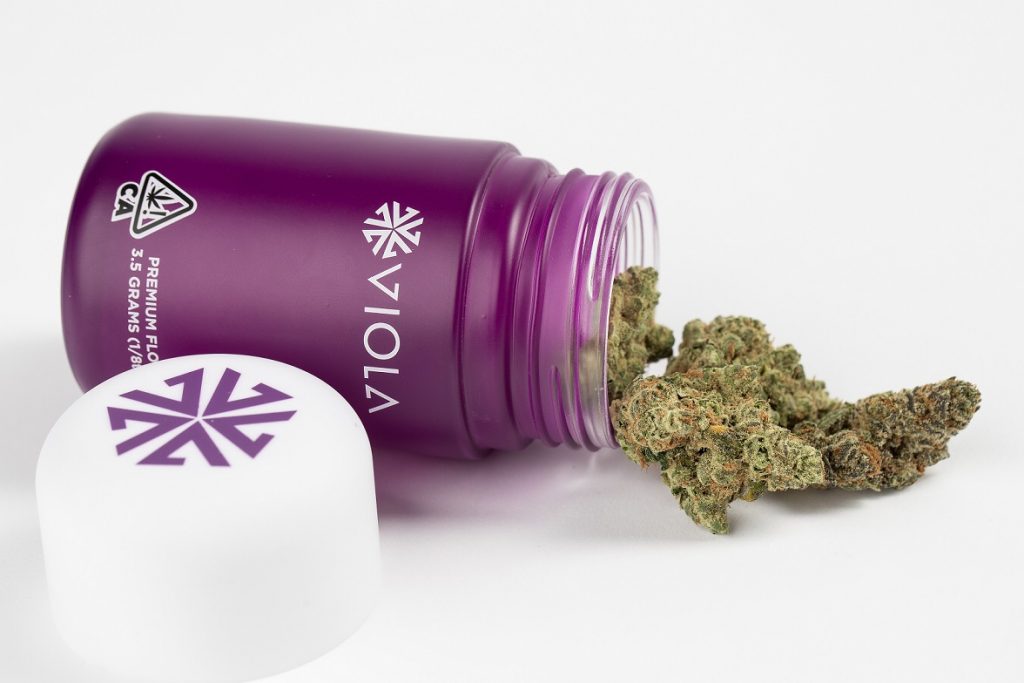
In Oregon, the company focused on live resin and live resin vapes, while it offers a wide variety of products including flower, pre-rolls, vapes, and concentrates in the California and Michigan markets. Viola is also planning to launch edibles in February 2020–the number of Viola SKUs is growing each year.
Distribution and Retail
The company shapes its distribution strategy around state regulations and its bandwidth within each market. For example, Viola has third-party distribution in Oregon and does in-house distribution in Colorado.
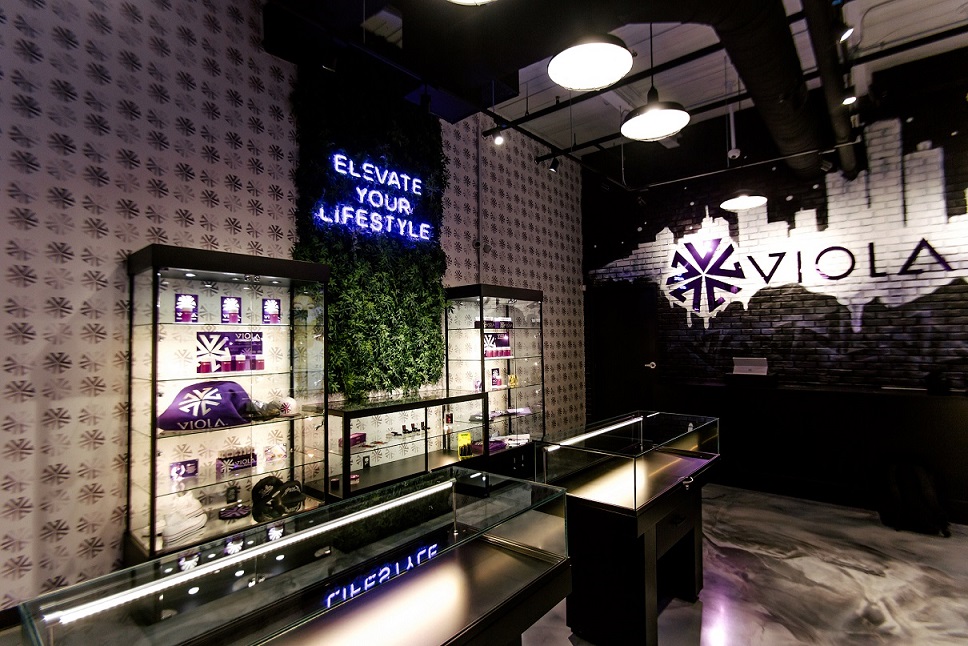
Viola is just ramping up its retail presence. The company is about to open its first retail store, located in Michigan. The company is also partnering with social equity applicants to open multiple retail locations in California next year.
Social Equity
Viola was founded with the intention of being a lifestyle brand with purpose. Cannabis may be a major industry now, but it has been used to destroy black and brown communities. “Eighty-five percent of drug arrests in the black community are cannabis-related,” said Harrington. “Now with this big, booming industry, we only represent 3 percent of it.”
Harrington and his team are looking for ways to help bring communities of color into the cannabis space. In California, the company held educational seminars to introduce people to the process of running a cannabis company. Through that process, the company found 38 people to help support. When applying for a license in the state, you need to have real estate. So, the company found eight pieces of real estate, and those 38 people are willing to work together to enter the industry.
Funding and Capital Allocation
Prior to the company’s recent investment round, Viola was built with funding from friends and family. The $16 million round led by Gotham Green Partners has helped Viola to expand its team, acquire its California cultivation site, and finish building out its Michigan facility. In addition to the capital, Gotham Green opens the door to further growth as a strategic partner, according to Harrington. As for the public markets, they are not attractive to the company at the moment.
2019 Growth
The company expects to do $20-plus million in revenue this year, compared to $7 million last year, according to Harrington. He sees the brand taking off and gaining greater market penetration, which will drive growth year after year.
As the company grows, community focus will remain at the forefront. That focus on community and people of color will continue to be a differentiator for Viola, according to Harrington. He is also looking forward to the opportunity to form strategic partnerships. Viola will remain committed to being flexible as it navigates the same regulatory challenges affecting the entire industry.
To learn more, visit the Viola . Listen to the entire interview:
Albert Harrington (born February 17, 1980) is an American former professional basketball player. Selected with the 25th overall pick in the 1998 NBA draft, Harrington played 16 seasons in the National Basketball Association (NBA) for the Indiana Pacers, Atlanta Hawks, Golden State Warriors, New York Knicks, Denver Nuggets, Orlando Magic and Washington Wizards. He also spent a short stint with the Fujian Sturgeons of the Chinese Basketball Association (CBA).
Entrepreneurship
After retiring from the NBA, Harrington started a business that produces cannabis extracts. The company, Viola Extracts, is named after Harrington’s grandmother. Suffering from glaucoma and diabetes, she tried cannabis at the urging of Harrington and found significant relief. The company cultivates cannabis in-house and has facilities in several states.
In February 2018 Harrington announced the launch of Harrington Wellness, a company that manufactures non-psychoactive cannabinoid products. Also announced was his investment in a third company Butter Baby, which makes cannabis edibles. All three companies together comprise The Harrington Group.
Advocacy
Harrington is a proponent for the legalization of cannabis. In October 2016, he appeared in an online ad endorsing the passage of California’s Proposition 64. He has also written an essy for The Players’ Tribune titled “9 Reasons to End the War on Marijuana”.
In October 2017, Harrington interviewed former NBA commissioner David Stern regarding cannabis use by players.

David Stern (above), told Harrington during the interview: “I’m now at the point where personally I think [cannabis] probably should be removed from the banned list. You’ve persuaded me.”
The United States’ cannabis industry is currently worth upward of $10 billion, and the industry has quickly established itself one of the fastest-growing ones in the country. All the while, its foundation presents the glaring implications of the privilege attached to its profit, while those criminalized for marijuana use and sales continue to serve time for past crimes, or are completely barred from capitalizing on marijuana’s positively-reflecting trends. Significantly high barriers to entry, astronomical startup costs in some cases, and a lingering stigma all continue to pose roadblocks.
As the REVOLT Summit x AT&T made its appearance in Los Angeles in October, there was naturally no better locale to set up a conversation with industry leaders on the fight for social equity and the extreme importance for disadvantaged communities to get in at what is currently the ground floor of the cannabis industry. Sitting down for the “Smoke & Mirrors: The Cannabis Revolution” discussion, panelists included Snoop Dogg, NBA veteran Al Harrington, Cura Partners CMO Jason White, Lowell Herb co-founder David Elias, and restaurateur and social equity activist Karim Webb.




