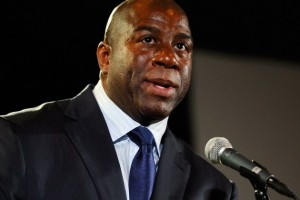
THERE IS “MAGIC” IN THE AIR, AS Denver Council Advances DIA Terminal Project Bid After Hearing From “CORPORATE INVESTMENT” Business Man, Mr. Earvin “Magic” Johnson Jr.

200px-Earvin_-Magic-_Johnson_on_'07
  • Facebook
  • Twitter
  • Google+
  • LinkedIn


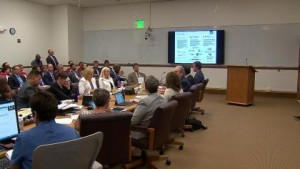
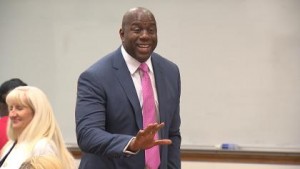
Denver, CO - August 17, 2016: The City Council's Business, Arts, Workforce and Aeronautical Services Committee are considering initial contracts related to the Great Hall Project at DIA. Magic Johnson, the retired NBA player, helps make the pitch to a City Council committee. (Photo by Hyoung Chang/The Denver Post)
  • Facebook
  • Twitter
  • Google+
  • LinkedIn


dia-jeppesen-terminal-6pkg-t8ransfer
  • Facebook
  • Twitter
  • Google+
  • LinkedIn


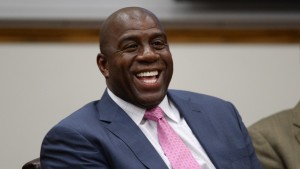
Bid team seeking long-term partnership, which includes ex-basketball star EARVIN “MAGIC” JOHNSON JR. as investor, speaks to committee.

A committee’s vote Wednesday to advance a proposal that would green-light negotiations with the preferred bid team for Denver International Airport’s terminal renovation came after members asked questions about the arrangement.

And after they were charmed, at least a little bit, by Earvin “Magic” Johnson Jr.

“I’ve been coming to Denver for over 30 years,” Johnson said at the start of his remarks. “You know, in those little hot pants that we used to wear and the purple uniform for the Lakers. But now, with a suit and tie, and I’m doing business in this great city.”

The retired 6-foot-9 NBA star, who posed for photos with some City Council members after the meeting, was there because his Magic Johnson Enterprises is an equity partner in the project consortium led by Madrid, Spain-based Ferrovial Airports.

The team also is led by Centennial-based Saunders Construction, which was among the managers of the airport’s hotel and transit center project. The bid team was selected by DIA officials over two others in June.

It’s seeking a long-term public-private partnership — potentially worth hundreds of millions of dollars — to renovate much of the 1.5 million-square-foot terminal. It would then oversee commercial operations in that part of the airport. Several council members cited 24 years as the potential term.

The arrangement would include the sharing of future revenues with the airport, from concessions and other sources. So far, DIA hasn’t released the conceptual financial details of Ferrovial’s bid or any of the three teams’ final proposals.

But a losing bidder, Westfield Airports, revealed in a recent filing that its team had proposed a $385 million project.

For now, DIA is asking the council to approve a “pre-development” agreement that sets in motion six months of formal negotiations for a partnership agreement, which the council would consider next spring. That initial contract is worth $9 million, but only if the airport decides not to move forward with Ferrovial.

The council also is reviewing a $600,000 contract with Los Angeles-based law firm Nossaman LLP to serve as DIA’s special counsel in negotiations.

The Business, Arts, Workforce and Aeronautical Services Committee advanced both contracts unanimously, except for the abstention of its chair, Stacie Gilmore. She recused herself from participating in discussions and voting because her brother-in-law’s company, Gilmore Construction, is on Ferrovial’s bid.

The full council could approve the contracts later this month.

In the presentation Wednesday, DIA CEO Kim Day said the major components of the project include moving the main security checkpoints from the open areas on the terminal’s main floor to the north end of Level 6, where some ticket counters are now, to effectively modernize screening for the post-9/11 era.

That would free up much of the lower level for an entry plaza from the new hotel and new Colorado-centric attractions. Among potential options: ziplines or a climbing wall.

The renovation, of course, also would create more space for shops, restaurants and other income-generating concessions. And it would mean changes to the baggage system, including some geared toward increasing capacity.

“We have a transformational project to undertake here,” said Chris Butler, whom Ferrovial has tapped as the executive director to oversee the project. Later, he referred to the iconic, striking tented roof structure of the terminal and said the goal was “to make sure that the interior of that building is reflective of the quality of the exterior.”

“We’re absolutely determined to do that,” Butler said.

The partnership would be the first at a U.S. airport for Ferrovial. It operates four airports in the United Kingdom, among other ventures.

Ferrovial’s company history has come under scrutiny from Unite Here, a union that is concerned about job retention for the DIA concession workers it represents. The union has pointed a bribery scandal in Spain, the involvement of a subsidiary in U.S. toll road projects whose operators filed for bankruptcy and problems on its projects.

The security of concession workers’ jobs, the long duration of the prospective partnership deal and the use of privatization for the project all came up in committee members’ questions Wednesday.

Several, including Kendra Black and Chris Herndon, said the public-private partnership model made sense for the terminal project. But Jolon Clark said he wasn’t sold on it and would scrutinize the arrangement more if a final agreement gets sent to the council next year.

Still others probed the team about the expected extent of meaningful contract participation by minority- and women-owned firms.

During his introduction, Johnson preemptively said he would play a role in ensuring the team meets such goals.

“I’m going to be a special adviser to the project,” Johnson said. “And what we want to do is really work with a lot of the minority firms. We want to make sure they participate here locally in this project, as well as women-owned businesses. We want to not only make sure that they have a piece of this project but also want to make sure that we mentor some of these great organizations as well and help them grow.”

Johnson said he has been involved in opening five Starbucks franchises in the Denver area. He’s also part of a concessions partnership at Los Angeles International Airport, among other ventures.

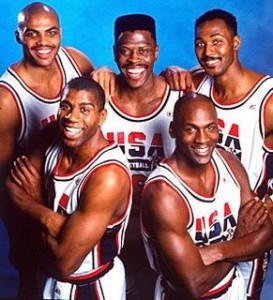
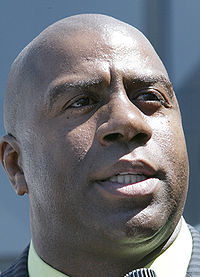
 Earvin “Magic” Johnson Jr. (born August 14, 1959) is an American retired professional basketball player who played point guard for the Los Angeles Lakers of the National Basketball Association (NBA) for 13 seasons. After winning championships in high school and college, Johnson was selected first overall in the 1979 NBA draftby the Lakers. He won a championship and an NBA Finals Most Valuable Player Award in his rookie season, and won four more championships with the Lakers during the 1980s. Johnson retired abruptly in 1991 after announcing that he had contracted HIV, but returned to play in the 1992 All-Star Game, winning the All-Star MVP Award. After protests from his fellow players, he retired again for four years, but returned in 1996, at age 36, to play 32 games for the Lakers before retiring for the third and final time. Mr. Earvin’s wealth has rumored estimates of, and or, in between, OR FROM  $600,000,000.00 MILLION to $990,000,000.00 Million Dollars and on the vertical climb!!!

MORE ON MR. EARVIN “MAGIC” JOHNSON:

Magic Johnson Enterprises is a company owned by retired NBA Hall of Fame legend Magic Johnson. After some criticism that he only invested with other people’s money, in 1995 Johnson took an equity stake along with what was then the Loews chain in the 12-screen movie theater in Baldwin Hills. The Beverly Hills-based Magic Johnson Enterprises formerly owned Magic Johnson Theatres in four cities, 31 Burger King restaurants in the Southeast, and 13 24-Hour Fitness/Magic Johnson Sport health clubs. Over the years, Magic Johnson Enterprises has continually invested ownership in many lucrative businesses including the Los Angeles Lakers, movie theaters and restaurants in the United States, including T.G.I. Friday’s, Sodexo, and Burger King locations.

Johnson’s urban investments were formed in 2001 as the Canyon-Johnson Urban Fund, an alliance with Canyon Capital. The alliance has financed 31 real estate developments in 13 states and Washington. The first Canyon-Johnson Urban Fund  raised $600 million while the third and biggest investment fund was started in April 2008 and drew $1 billion from pension funds and other investors. The Canyon-Johnson fund was involved in the $100-million purchase of the 32-story former Transamerica Center complex in downtown Los Angeles that subsequently was renovated and sold for $205 million. The fund also had a stake in Sunset+Vine in Hollywood, which was built for $125 million and sold for $160 million.

In the summer of 2006, the company made headlines for concluding a deal with Sodexo, one of the largest food services and facilities management companies in the world. The initiative includes a marketing agreement and the formation of SodexoMAGIC, LLC, a new joint venture that is 51 percent owned by Johnson.

Magic Johnson Enterprises has also invested in Jopwell.  Jopwell is a diversity hiring startup that helps companies connect with and recruit underrepresented ethnic minority candidates for jobs and internships. Magic Johnson Enterprises’ investment was part of a $3.25 million seed round that included Andreessen Horowitz,Kapor Capital, Omidyar Network and Valar Ventures.

In January 2012, Johnson joined with Guggenheim Partners and Stan Kasten in a bid for ownership of the Los Angeles Dodgers baseball team. In March 2012, Johnson’s ownership group was announced as the winner of the proceedings to buy the Dodgers. The Johnson-led group, which also includes movie executivePeter Guber, paid $2 billion for the Dodgers, the largest amount paid for a professional sports team. While Magic Johnson is considered the leader of the ownership group, the controlling owner is Mark Walter, chief executive officer for Guggenheim Partners. Peter Guber, who is co-owner of the Golden State Warriors, owns a small stake in the Dodgers along with Johnson. Johnson and Guber are also partners in the Dayton Dragons, a minor league baseball team that has sold out 844 consecutive games, a record for professional sports.

Together with Guggenheim, Johnson was also involved in the February 2014 purchase of the Los Angeles Sparks team in the WNBA. As such, in 2014 Johnson was named one of ESPNW’s Impact 25.

Johnson announced his co-ownership of a future Major League Soccer expansion franchise based in Los Angeles on October 30, 2014. The temporary name isLos Angeles Football Club while the ownership group explores a permanent name.

New owners of the Los Angeles Dodgers, from left, Robert Patton, Stan Kasten, Mark Walter, Earvin "Magic' Johnson," Peter Guber, and Todd Boehly pose for a photo at Dodger Stadium in Los Angeles on Wednesday, May 2, 2012. The $2 billion sale of the team to Guggenheim Baseball Management was finalized Tuesday. (AP Photo/Damian Dovarganes)
  • Facebook
  • Twitter
  • Google+
  • LinkedIn

Dream+Team1
  • Facebook
  • Twitter
  • Google+
  • LinkedIn
Magic-Johnson-600x400
  • Facebook
  • Twitter
  • Google+
  • LinkedIn
dia-jeppesen-terminal-6pkg-9transfer
  • Facebook
  • Twitter
  • Google+
  • LinkedIn

About The Author

Live Chat Software

Leave a reply

Advertisement

Like Us On Facebook!